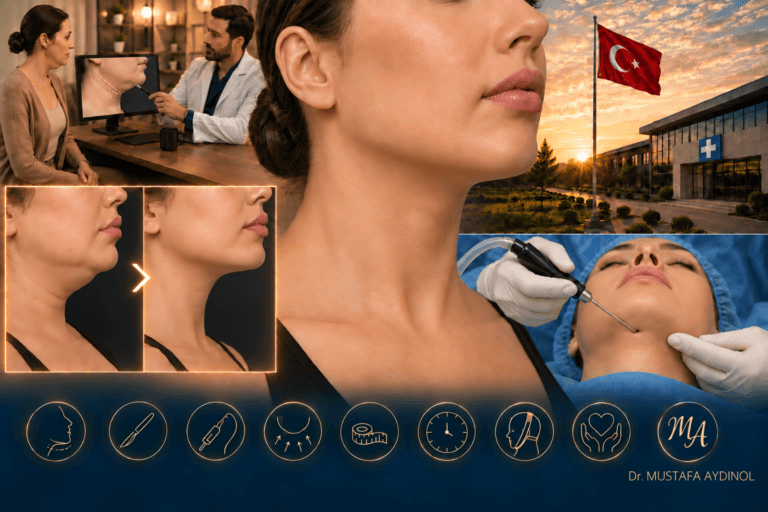


Liposuction is one of the most performed cosmetic surgical procedures in the world, and one of the most misunderstood. The procedure of today is not the procedure of twenty years ago. New ultrasound-assisted and high-definition techniques have made it more refined, more predictable, and more capable of producing genuinely natural results. At the same time, Turkey (Türkiye) has become one of the leading destinations for international patients seeking quality surgical care at sensible cost.
This guide is written by a practising plastic, reconstructive and aesthetic surgeon based in Istanbul. It explains, in plain language, how modern liposuction actually works, the differences between VASER, Lipo 360 and HD liposuction, which areas can be treated, what recovery looks like, and what to watch out for when considering treatment abroad. The aim is to give you the clinical clarity you need to make a confident decision rather than a marketing brochure.
Medical note: This article is for general education and does not replace an in-person consultation. Whether liposuction is appropriate for you, and which technique suits your anatomy best, can only be determined after a physical examination by a qualified plastic surgeon.
What modern liposuction actually is
Liposuction is a surgical procedure that removes stubborn, diet-resistant fat from specific areas of the body and face. A small access point is made in the skin, and a thin hollow tube called a cannula is introduced into the fat layer. The fat is loosened and gently removed under controlled suction. The skin and surrounding tissues remain in place.
It is important to understand what liposuction is not. It is not a weight loss procedure. It does not treat obesity, cellulite or loose skin, and it cannot replace a healthy diet and regular exercise. It is a contouring tool, designed to reshape an area that has refused to respond to lifestyle change in a patient who is reasonably close to their stable weight.
The single biggest change in liposuction over the past two decades has been the move from a brute-force, large-volume procedure towards a much more precise, energy-assisted technique. Modern liposuction is gentler on tissue, allows better skin retraction, and gives the surgeon far greater control over the final shape.
VASER, Lipo 360 and HD: what the techniques actually mean
The names you see on clinic websites are not competing products. They describe different aspects of the same procedure, and a single operation can combine all three. Understanding what each one actually does will help you have a much better conversation with any surgeon you consult.
Traditional (tumescent) liposuction
The starting point for all modern techniques. A solution of saline, local anaesthetic and a vasoconstrictor is infiltrated into the fat layer first. This solution numbs the area, reduces bleeding, and makes the fat easier to remove. From there, the surgeon uses a cannula to remove the fat directly. Tumescent liposuction is well-established, safe in experienced hands, and remains an excellent choice for many cases. The newer techniques below build on top of it.
VASER liposuction
VASER stands for “Vibration Amplification of Sound Energy at Resonance.” In plain language, it is ultrasound-assisted liposuction. After the tumescent solution has been infiltrated, a probe delivers ultrasound energy into the fat layer. The energy selectively breaks apart fat cells without significant damage to the surrounding blood vessels, nerves and connective tissue. The liquefied fat is then removed with a smaller, gentler cannula.
The advantages are practical. Because the fat is already emulsified, less force is needed to remove it. Bruising and swelling are typically reduced. Skin retraction tends to be better, which matters in areas where laxity is a concern. And the precision of VASER makes it the technique of choice for more detailed, sculpted work. The trade-off is that it is more technique-dependent. The energy must be matched to the tissue, and the surgeon’s experience with the device matters as much as the device itself.
Lipo 360 (also called 360 liposuction)
Lipo 360 is not a separate technology. It is an approach. It refers to circumferential treatment of the entire midsection, meaning the abdomen, the flanks (“love handles”), the upper and lower back, and the bra-line area, all in a single operation. The idea is that contour is three-dimensional. Treating only the front of the abdomen, while leaving the flanks and back untouched, often gives an unnatural result where one view looks improved but the side and back views do not match.
Lipo 360 produces a much more harmonious change to overall shape, and it can be performed using traditional, VASER or HD techniques, or a combination. It is especially popular with patients seeking definition of the waistline.
HD (high-definition) liposuction
HD liposuction takes the principle a step further. Rather than simply removing fat from an area, the surgeon selectively removes fat from around underlying muscle groups to reveal their natural shape. The most common application is the abdomen, where careful sculpting around the rectus muscles can produce a visibly defined “athletic” appearance. HD techniques are also used on the chest in male patients and along the arms.
HD liposuction is the most artistically demanding of these techniques and the least forgiving of error. Used appropriately on the right candidate, the results can be dramatic. Used on an unsuitable patient or by an inexperienced surgeon, the results can look artificial. The technique is not for everyone, and an honest surgeon will sometimes recommend against it.
Laser liposuction and “non-surgical” alternatives
Laser-assisted liposuction (sometimes marketed as SmartLipo) uses laser energy in place of, or alongside, ultrasound. Results in the literature have been mixed and the field has largely moved towards VASER for energy assistance. Truly “non-surgical” treatments such as cryolipolysis (fat freezing) can help with very small, localised fat pockets but do not produce the same change in shape as surgical liposuction. For mild laxity with a small fat component, a less invasive option such as Endolift may be appropriate. The right choice depends entirely on what you actually need.
Which areas can be treated?
Liposuction can be performed almost anywhere fat is stored. The most commonly requested areas, in roughly the order patients raise them in consultation, are:
- Chin and neck: chin liposuction and double chin treatment are among the most popular individual areas, particularly in younger patients who feel their facial profile does not match the rest of their face
- Arms: the upper arms, often combined with the bra-line for a more refined silhouette
- Abdomen and waist: the central focus of most Lipo 360 cases
- Flanks and back: the “love handle” and bra-line areas
- Hips and outer thighs: often called the “saddlebag” area
- Inner thighs and knees: for finer contouring of the leg line
- Male chest: for patients with pseudogynaecomastia (fatty fullness without true breast tissue)
- Ankles and calves: a smaller proportion of cases but valuable in the right candidate
A liposuction procedure is rarely limited to a single zone. Most plans involve two to four areas treated in one operation, with the combinations chosen to produce a harmonious overall result rather than spot-treating one area at the expense of another.
Who is a good candidate?
Liposuction is most likely to suit you if you:
- Are at or near a stable, healthy weight
- Have specific fat pockets that have resisted diet and exercise
- Have reasonable skin quality and elasticity
- Are in good general health, with any chronic conditions well-controlled
- Have realistic expectations about what a contouring procedure can achieve
Liposuction is probably not the right choice if you:
- Are looking for a way to lose a significant amount of weight
- Have significant loose skin (in which case a skin-removal procedure may be needed instead, or in combination)
- Have poorly controlled diabetes, clotting disorders or other untreated medical issues
- Cannot commit to maintaining your weight afterwards
An ethical clinic will sometimes recommend against liposuction. That is a sign of good judgement, not a lost sale.
What recovery actually looks like
Recovery varies with the number of areas treated and the volume of fat removed, but a typical experience looks like this:
- Day of surgery: performed under general or, for smaller areas, local anaesthesia. Most patients go home the same day or after a single overnight stay.
- First week: bruising, swelling and a “muscle-soreness” feeling in the treated areas. A compression garment is worn continuously. Most patients are walking comfortably within days.
- Two weeks: most patients return to desk-based work and light social activity. Bruising has largely settled, swelling is improving.
- Four to six weeks: gradual return to gentle exercise. Compression garment continues, usually for around six weeks in total.
- Three to six months: swelling fully settles and the final shape becomes visible. Skin continues to retract and refine over this period.
Lymphatic drainage massage in the first weeks can help reduce swelling and improve comfort. Specific instructions, including when to fly safely after surgery (an important consideration for international patients), will be given to you in writing.
Risks and the “liposuction gone wrong” question
Liposuction has been performed in its modern form for more than four decades, and in experienced hands it has a strong safety record. It is still surgery. The main risks include bruising, swelling, contour irregularities, asymmetry, fluid collections (seromas), infection, blood clots, and reactions to anaesthesia. Most of these are uncommon and manageable when they occur.
The phrase “liposuction gone wrong” is a frequent online search, and it deserves an honest answer. Almost all of the genuinely poor outcomes in liposuction trace back to a small number of avoidable situations: unqualified operators (cosmetic doctors or non-surgeons performing the procedure outside their training), unrealistic case selection (treating patients who needed skin removal rather than fat removal), unsafe facilities (procedures performed outside proper surgical settings), or excessive volumes removed in a single operation. The technique itself is rarely the problem. The decision-making around it is.
This is the single most important reason to choose your surgeon carefully, particularly when travelling abroad. The questions to ask are practical:
- Is the procedure being performed by a board-certified plastic surgeon, not a general practitioner or aesthetician?
- Is it taking place in a licensed surgical facility?
- Does the surgeon perform this procedure frequently, and can they show before-and-after photographs of patients with similar starting points?
- Is there a clear plan for post-operative follow-up, including after you return home?
How much does liposuction cost?
Liposuction pricing is one of the most searched aspects of the procedure, and one of the most variable. The cost depends on:
- The number and size of areas treated
- The technique used (traditional, VASER, HD, or a combination)
- Whether liposuction is combined with another procedure such as a tummy tuck or fat transfer
- The surgeon’s training and experience
- The hospital or surgical facility
- Anaesthetic and post-operative care
Turkey offers competitive value compared with the UK and most of Western Europe. Patients travelling from London, Manchester, Birmingham or further afield routinely find that they can access surgery in an internationally accredited setting, performed by an experienced plastic surgeon, at a fraction of the equivalent UK price. The point of this comparison is not that “cheap is good.” It is the opposite. Turkey is one of the few destinations where genuine surgical quality and sensible pricing coexist, which is why discerning international patients increasingly choose it.
Be cautious of suspiciously low package deals. The cost of liposuction is meaningfully driven by the experience of the hands performing it. That is not the line item on which to economise.
Combining liposuction with other procedures
Liposuction is frequently part of a larger plan rather than a stand-alone operation.
Liposuction and tummy tuck
One of the most common combinations. Liposuction shapes the flanks, back and waist, while a tummy tuck addresses the loose skin and muscle separation of the abdomen itself. Together they produce a much more complete midsection result than either alone.
Liposuction after major weight loss
For patients who have lost significant weight, particularly with the help of GLP-1 medications or bariatric surgery, liposuction alone is rarely the right answer. The dominant issue is usually loose, hanging skin rather than residual fat. The right plan for these patients is typically a combination of skin removal and selective contouring. This is covered in detail in our guide on surgery after Ozempic and major weight loss.
Fat transfer (lipofilling)
Fat removed during liposuction is biological material that can be reinjected elsewhere to add volume. Common destinations include the face (for volume restoration in patients with lost facial fat), the breasts and the buttocks. When a surgeon describes a “Brazilian butt lift” today, what is usually meant is fat transfer from liposuction areas to the buttock.
Liposuction Recovery at a Glance
Recovery after liposuction is faster than most patients expect: one night in hospital, drains out around day 3, and most international patients fly home on day 5 or 6 after a final check-up. Desk work is realistic within about a week, light cardio from weeks 3 to 4, and full training at week 6, while the final contour settles over 3 to 6 months. The compression garment (6 to 8 weeks) and regular lymphatic massage are the two habits that most influence the final result. For the full day-by-day protocol, including showering rules and travel advice, read the complete liposuction recovery timeline.
Liposuction in Istanbul with Dr Mustafa Aydınol
If you are considering liposuction and looking at Turkey as a destination, the single most important decision you will make is not the technique. It is the surgeon. Liposuction is a procedure where outcome depends overwhelmingly on technical skill and aesthetic judgement, far more than on the device used or the price paid.
Dr Mustafa Aydınol is a Plastic, Reconstructive and Aesthetic Surgeon based in Istanbul, with experience in all of the modern techniques discussed in this guide (traditional, VASER, Lipo 360 and HD liposuction) and in combining liposuction with related body and facial procedures. His international patient base includes people travelling from Germany, Italy, the United Kingdom and France.
What this means for you as a patient:
- A surgeon-led consultation that assesses you honestly, including whether liposuction is the right tool for your anatomy or whether a different procedure (or combination) would serve you better
- A treatment plan built around your shape, your priorities and your timeline
- Clear information about technique selection, expected results, recovery and cost before any decision is made
- Coordinated care for international patients, including pre-operative assessment, surgery in a licensed facility, post-operative recovery in Istanbul and structured follow-up after you return home
If you would like a professional opinion on whether liposuction suits you and which technique would produce the best result for your anatomy, you can request a consultation. Share your concern and, where helpful, photographs, and you will receive an honest assessment rather than a sales pitch.
Frequently asked questions
How much does liposuction cost in Turkey (Türkiye)?
Prices depend on the number of areas, the technique used, whether the procedure is combined with others, and the experience of the surgeon. Turkey offers competitive pricing compared with the UK and Western Europe, but the only accurate figure comes from a personal assessment. Treat suspiciously low flat rates with caution.
What is the difference between VASER, Lipo 360 and HD liposuction?
VASER is an ultrasound-assisted technique that selectively melts fat before removal. Lipo 360 refers to circumferential treatment of the entire midsection. HD or “high-definition” liposuction is an artistic technique used to reveal underlying muscle definition. They are not competing brands. They are different aspects of the same procedure and can be combined.
Is liposuction a weight loss procedure?
No. Liposuction is a body contouring procedure, not a weight loss treatment. It is designed to remove stubborn fat pockets in patients who are close to a stable weight, not to treat obesity.
What is the recovery time after liposuction?
Most patients return to desk-based work within 7 to 14 days. Swelling settles over several weeks, and the final result becomes visible at around three to six months. A compression garment is worn for several weeks to support healing.
Will I have scars after liposuction?
The access points used for liposuction are very small, typically a few millimetres, and are placed in inconspicuous areas such as skin creases. The resulting marks usually fade significantly over twelve months and are not the kind of long scars associated with skin-removal procedures.
Is liposuction safe?
In experienced hands, on an appropriate candidate, and in a properly equipped facility, liposuction has a strong safety record. Most reported “liposuction gone wrong” stories trace back to unqualified operators or unsafe settings. The surgeon, the indication and the facility matter more than the technique itself.
Can liposuction tighten loose skin?
Modern energy-assisted techniques such as VASER produce some skin retraction, which is helpful for mild laxity. They cannot, however, remove loose, hanging skin. If significant skin laxity is present, a skin-removal procedure (such as a tummy tuck or arm lift) is usually needed, sometimes alongside liposuction. Endolift can also help where the laxity is mild.
How long do liposuction results last?
The fat cells removed during liposuction do not grow back. As long as your weight remains reasonably stable, the contour change is long-lasting. Significant weight gain can still cause the remaining fat cells (in treated and untreated areas) to enlarge, so maintenance of a healthy lifestyle is essential.
Can liposuction be combined with other surgery?
Yes. Common combinations include liposuction with a tummy tuck, liposuction with fat transfer to the face or breasts, and liposuction as part of a post-weight-loss body contouring plan. What can safely be combined in a single operation depends on the volumes involved and your overall health, and will be planned by your surgeon.
Related Posts
 Loose Skin After Weight Loss: A Plastic Surgeon’s Guide to Surgery After Weight-Loss Medication
 Ozempic Face: Why Rapid Weight Loss Ages the Face and How Fat Grafting Restores It
 Gynecomastia Surgery in Turkey
 Fat-Based Fillers in 2026: What alloClae, Renuva and Lipoderma Mean for International Patients