


 Dr. Mustafa Aydınol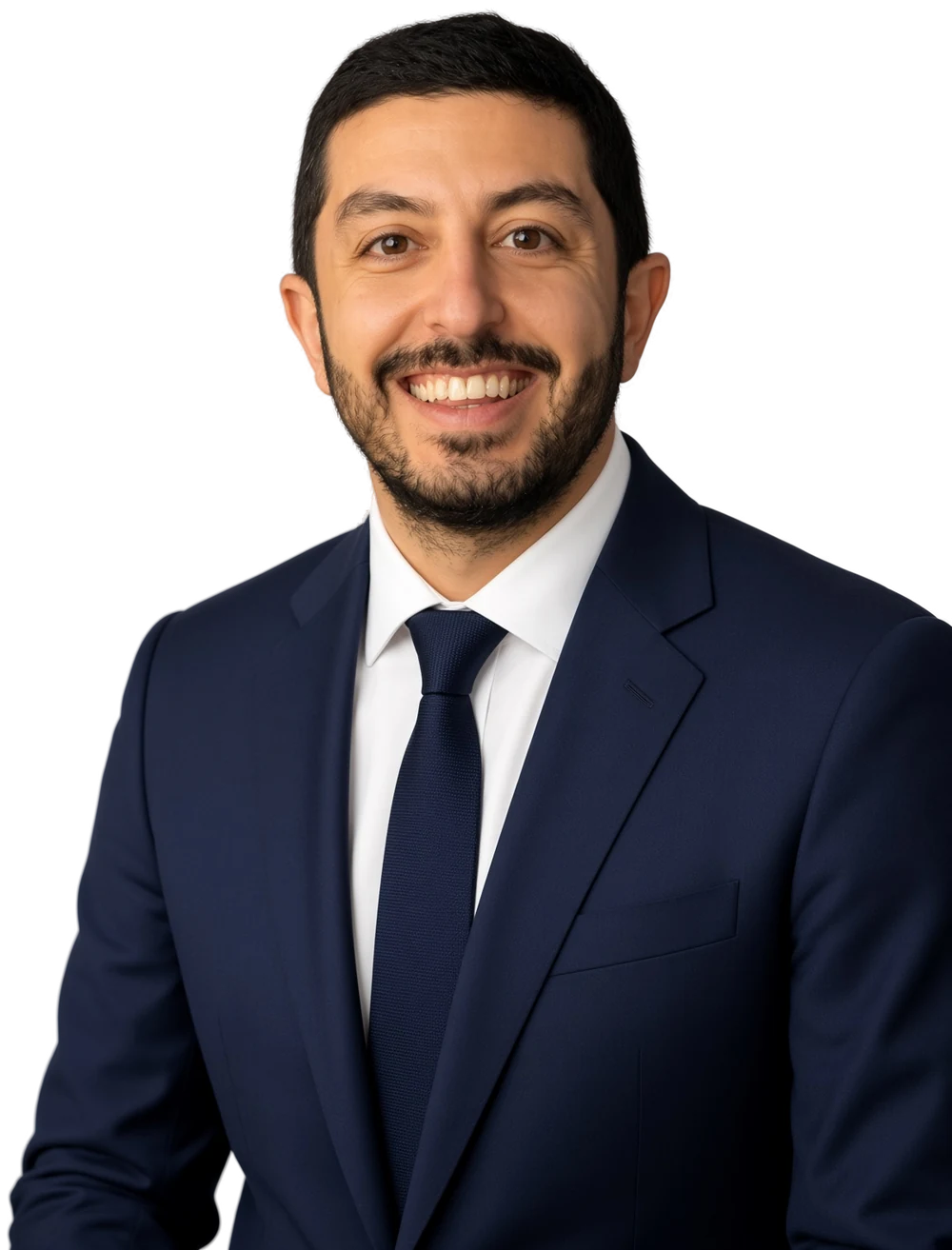
The Facelift Guide
What I explain to every patient before a facelift in Istanbul: which operation fits which face, what your week here looks like, and how to judge any surgeon, including me.
- ISAPS member
- Turkish Society of Plastic Reconstructive and Aesthetic Surgeons
- Health Tourism Authorization, Turkish Ministry of Health
In this guide
- What a facelift does, and what it does not
- SMAS and deep plane: what the words mean
- Which operation fits your face
- Results from my practice
- Are you a good candidate?
- The operation
- Your week in Istanbul
- After you fly home
- Risks and honest limits
- How to read before and after photos
- Questions to ask any surgeon
- Cost and how to get a quote
- About Dr. Aydınol and your next step
Before you start
Facelift is the operation where the words on a clinic’s website tell you the most about what will actually happen in the operating room. SMAS, deep plane, endoscopic, mini, mid-face: these terms describe different operations with different results and different recoveries, and they are often used as if they meant the same thing.
This guide is my attempt to make them clear. It explains what I do and why, what your stay in Istanbul looks like day by day, what recovery is really like once you are home, and the questions you should ask any surgeon before you decide.
Read it at your own pace. When you are ready, send me a few photographs and I will tell you honestly whether your face needs a mid-face lift, a full deep plane facelift, or nothing yet.
What a facelift does, and what it does not
A modern facelift is not a skin-tightening operation. It repositions the deeper structures of the face that have descended with age, and only then re-drapes the skin over them, with very little tension on the skin itself.
I assess every face in three parts
Position
Descent of the deep tissues: fallen cheeks, jowls, a softened jawline, a loose neck. This is what a facelift corrects.
Volume
Loss of facial fat: hollow cheeks, under-eye hollows. This needs fat grafting, not lifting.
Skin quality
Fine lines, texture, dullness, early laxity. Fotona laser and mesotherapy treat this, not surgery.
What a facelift will not do
- It does not restore lost volume or resurface the skin. Most faces age in more than one way, which is why a facelift is often combined with something else, and why it is sometimes the wrong answer.
- It does not stop ageing. It resets the clock, and your face continues to age naturally from its new starting point.
- Botox and fillers cannot replace it. Filler adds volume but cannot move tissue that has fallen; used instead of surgery in a descended face, it tends to make the face look heavier.
No real descent yet? Then you may not need a lift
Four laser modes in one session, including a step from inside the mouth. Gradual tightening and better texture with minimal downtime; best for early changes and for maintenance after a facelift.
Hyaluronic acid, vitamins and peptides delivered just under the skin to hydrate and brighten it. A skin-quality treatment, often combined with Fotona.
The honest boundary: no laser or injection can lift jowls that have structurally descended or remove genuinely loose skin. If your examination shows that, I will say so. Fotona 4D laser
SMAS and deep plane: what the words mean
Every modern facelift works on the SMAS, the muscular and fibrous layer under the skin of the face that sags with age. The difference between techniques is not whether they touch the SMAS, but how.
SMAS lift (plication)
The skin is lifted off the face and the SMAS underneath is tightened from the surface with sutures, or a strip of it is removed. In the right patient, with lighter tissue, mild to moderate laxity and ageing concentrated along the jawline, a well-executed plication gives excellent, natural results.
Deep plane facelift
The dissection goes underneath the SMAS. The ligaments that tether the face are released, and skin and SMAS are moved together as one block, repositioned upward rather than pulled backward. The tension sits in the deep layer, not in the skin, so the face looks rested rather than pulled.
Is deep plane always better?
Not automatically. SMAS is a layer; deep plane is a technique. A well-executed SMAS plication in a well-selected patient beats a poorly executed deep plane. The deep plane’s advantage shows in the mid-face and in more advanced descent. Execution matters more than the label.
Every facelift I perform is a deep plane operation. The choice I make case by case is not the plane; it is the extent and the access.
Which operation fits your face
Endoscopic mid-face lift
For ageing in the middle of the face: descended cheeks, deepening nasolabial folds, hollowing under the eyes, but a clean jawline and neck. Through small incisions hidden in the hairline, the mid-face is released and lifted vertically with a camera. There is no visible scar in front of the ear.
Deep plane full facelift
For jowls, loose skin along the jaw and descent across the whole face. The incision runs discreetly around the ear; the deep plane is released from cheek to jawline and the whole face is repositioned. This is what most people mean by a facelift.
Neck lift, when the neck needs it
Added for loose skin under the chin, neck bands or a blunted jaw and neck angle. If your neck is still clean, I do not add it. A longer operation name does not help anybody.
Often planned in the same operation
- Upper and lower eyelid surgery (blepharoplasty)
- Canthopexy, to support the outer corner of the eye
- Temporal or brow lift
- Fat grafting, to restore lost volume
Combinations are planned in advance, as one operation and one recovery. Nothing is added at the last minute.
Results from my practice
These are my own patients. Each photo is labelled with exactly what was done, nothing more.
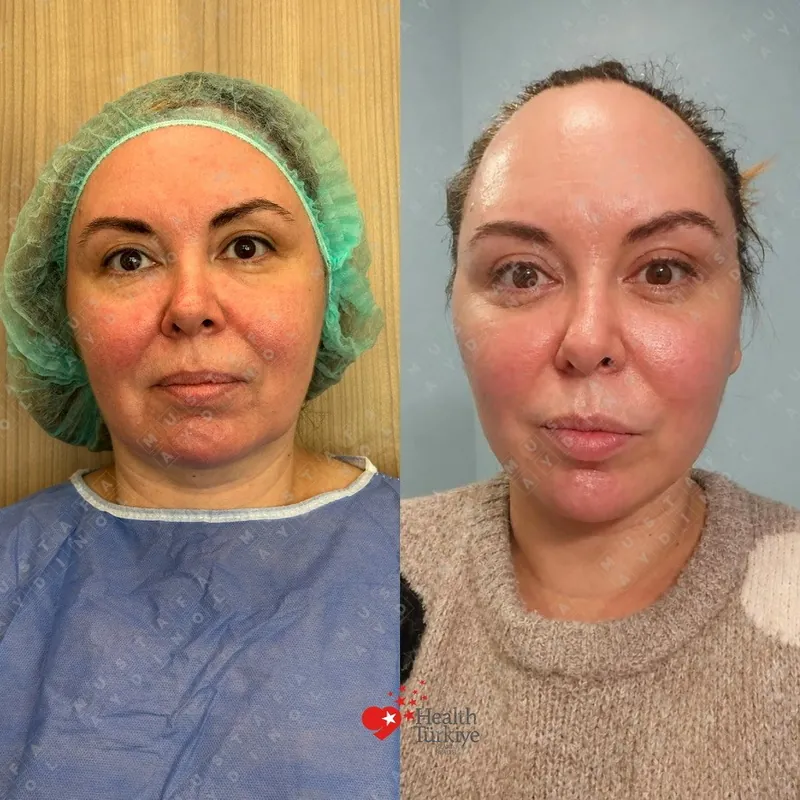 Front
Front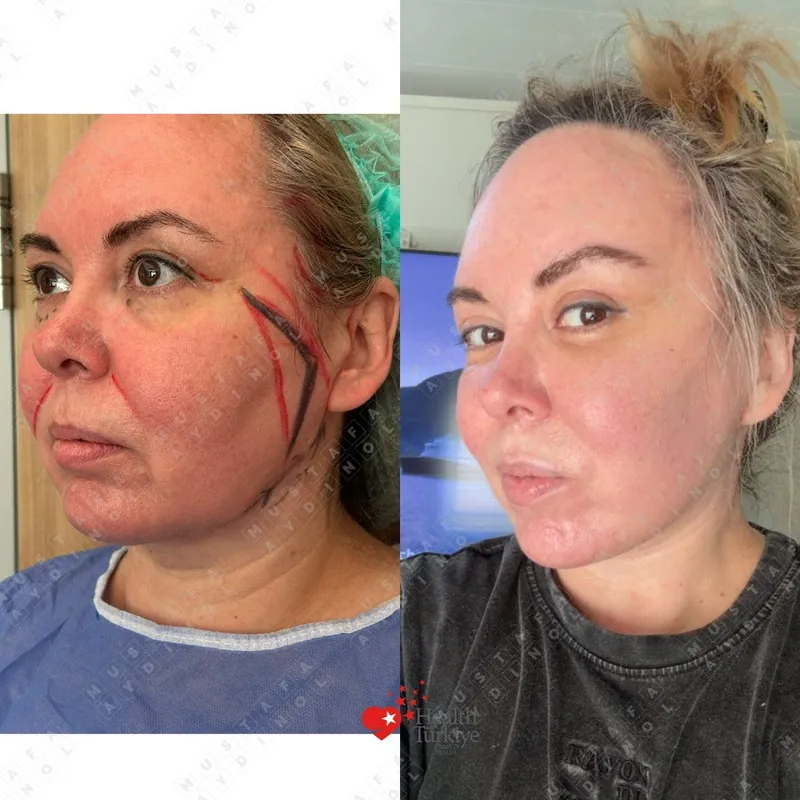 Oblique
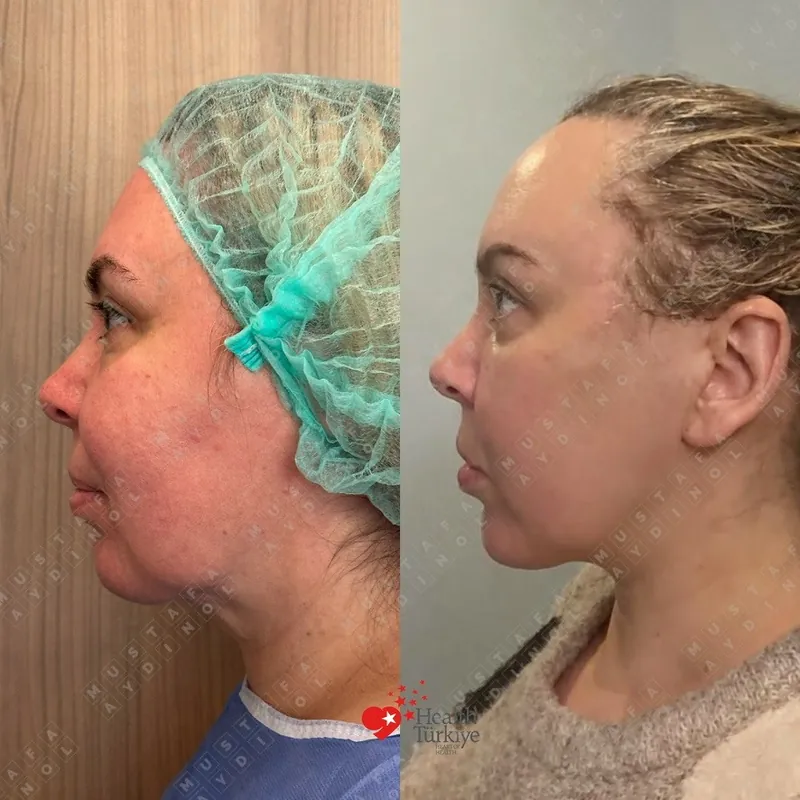 Profile
Facelift
The same patient before surgery (left in each pair) and after (right), photographed from the front, at an angle and in profile. Judging a facelift from one flattering angle is not enough; the jawline and neck show the truth in profile.
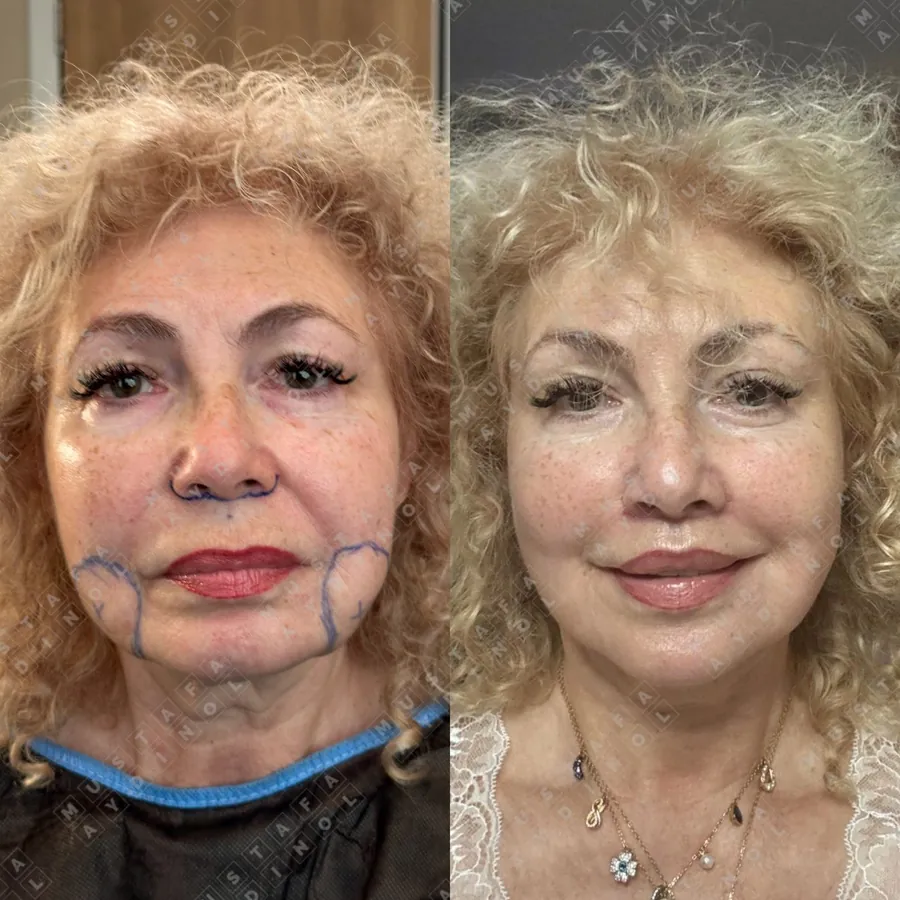
Deep plane facelift, neck lift and lip lift
Before surgery, with the pre-operative markings (left), and after (right).
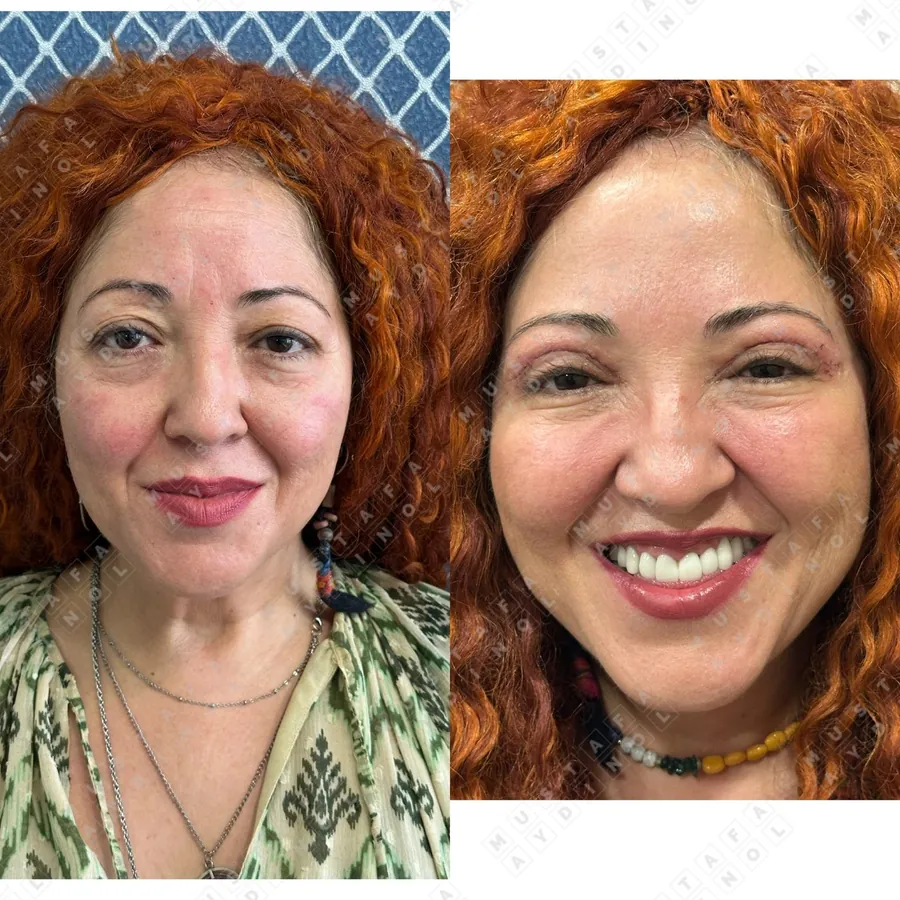
Blepharoplasty, Botox and Fotona 4D laser
When the problem is the eyelids and skin quality rather than descent, the answer is not a facelift.

She came back years after her own surgery, this time bringing her sister for a facelift.
More results: Before and after gallery
Are you a good candidate?
There is no right age for a facelift. The real question is whether your face shows the structural changes surgery can correct, and whether you are healthy enough for general anaesthesia.
Most of my facelift patients fall into three groups
Forties and fifties, mid-face descent
Told everywhere that they are too young for a facelift. The endoscopic mid-face lift exists precisely for them.
Fifties to seventies, full-face descent
The deep plane full facelift, often combined with eyelid surgery and, when needed, a neck lift.
Men
The incisions respect the beard line and the aim is usually more conservative: a refreshed, alert face rather than a dramatic change.
When I will say no, or not yet
- Your concern is mainly skin quality, fine lines or early laxity. A facelift is the wrong tool; I will tell you so and suggest Fotona laser or mesotherapy instead.
- You smoke or use nicotine. Facelift skin depends on its blood supply, and nicotine is a real problem in this operation specifically. You will need to stop well before surgery.
- You are still losing weight, for example on a weight-loss medication. I do not operate while weight is still falling; it should be stable for at least three to six months before we plan the face.
- You are asking for a result you saw on someone else, especially an early photo. A plan built on someone else’s face, or someone else’s swelling, is built on an illusion.
The operation
Releasing and repositioning the deep layer across the whole face is slow, deliberate work. It is exactly the part I refuse to hurry.
The haemostatic net
Whether drains are used depends on the case. Often a haemostatic net makes them unnecessary: a fine, temporary quilting of sutures across the treated area that closes the space where fluid would collect, spreads pressure evenly and protects the skin in the first days.
It looks unusual in photographs, and patients are sometimes alarmed when they first see it online. It is removed painlessly on day three, and it also reduces bruising.
Your week in Istanbul
Five to seven days in Istanbul is enough for a facelift.
- Day 0
Surgery
Your operation, followed by one night in hospital under observation.
- Days 1 to 3
Rest at your hotel
You wear a compression garment and thin adhesive strips along the incision lines, plus the haemostatic net if one was placed. My team is in touch with you every day.
- Day 3
Net and drains out
The net comes off, drains come out if any were used, and I check your face.
- Days 5 to 7
Final examination, then home
A last check before you leave, and you fly home.
After you fly home
- Around 2 weeks
Most patients are presentable in ordinary company and back to desk work.
- Weeks 4 to 6
Exercise can restart. Until then, avoid heavy exertion and anything that raises your blood pressure sharply.
- The first months
Swelling settles gradually. Temporary numbness of the cheeks and ears, and some tightness with big expressions, fade over the same period.
- 6 to 12 months
The honest checkpoint. Swelling has gone, scars have matured, and this is when the result should be judged.
Normal in the early weeks
- Swelling and bruising, which may move down towards the neck
- Tightness and a feeling of pressure
- Patchy numbness around the cheeks and ears
- Slight asymmetry of swelling between the two sides
Contact my team straight away if you notice
- Sudden swelling on one side, or pain that is quickly getting worse
- Fever, or redness that is spreading
- Discharge from an incision
- New weakness in part of the face
Risks and honest limits
Every operation has risks. These are the ones that matter in facelift surgery, and how they are handled.
Haematoma
Bleeding under the skin, most likely in the first hours after surgery. This is why you stay the night in hospital.
Facial nerve weakness
Temporary weakness of a branch of the facial nerve. It is rarer in deep plane surgery done by surgeons who work in that plane routinely, because the nerves are seen and protected rather than worked around blindly.
Numbness
Numbness of the cheeks and ears is common and fades over months.
Scars
A facelift leaves scars; anyone who says otherwise is selling something. They follow the natural contours around the ear and into the hairline, and in most patients they are hard to find once healed.
Two honest limits
A facelift resets the clock; it does not stop it. The repositioning is lasting, and most patients feel the benefit holds for around a decade, ageing naturally rather than snapping back.
Smoking is a real problem in facelift surgery specifically. If you smoke, please read my guide to smoking and surgery before you plan anything.
How to read before and after photos
Almost every facelift looks great at three months, including results that will not hold. At that stage residual swelling fills fine lines and smooths contours; it is doing part of the surgeon’s job.
What to look for
- Time stamps. Ask to see the same patient at twelve months, not only at six weeks.
- The hairline, the earlobe and the area just in front of the ear. This is where shortcuts show once the swelling has gone.
- Identical lighting and angle in the before and after. Flattering light does more work than most people realise.
- The face at rest and in motion, not only carefully chosen still images.
I apply the same rule to my own patients: if you love your face at three months, wait until month twelve before you judge it. And ask me, as you should ask any surgeon, for photos taken at twelve months.
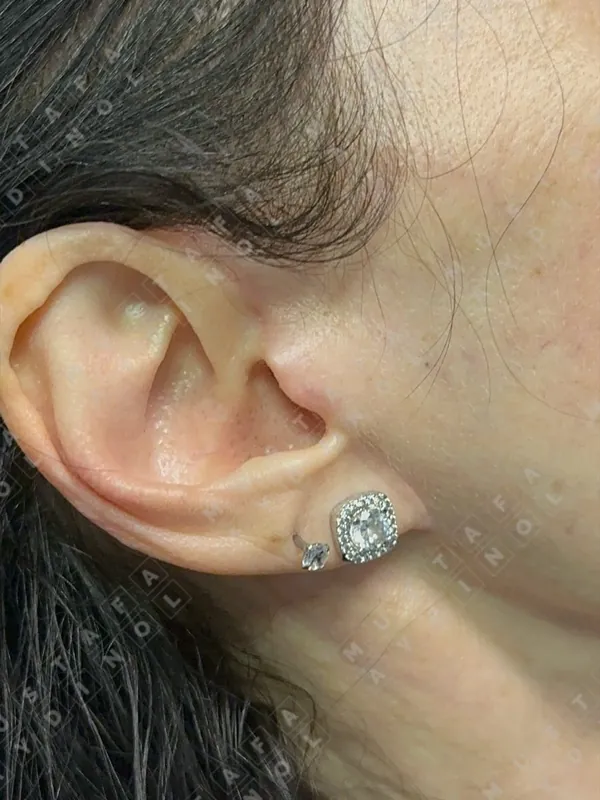
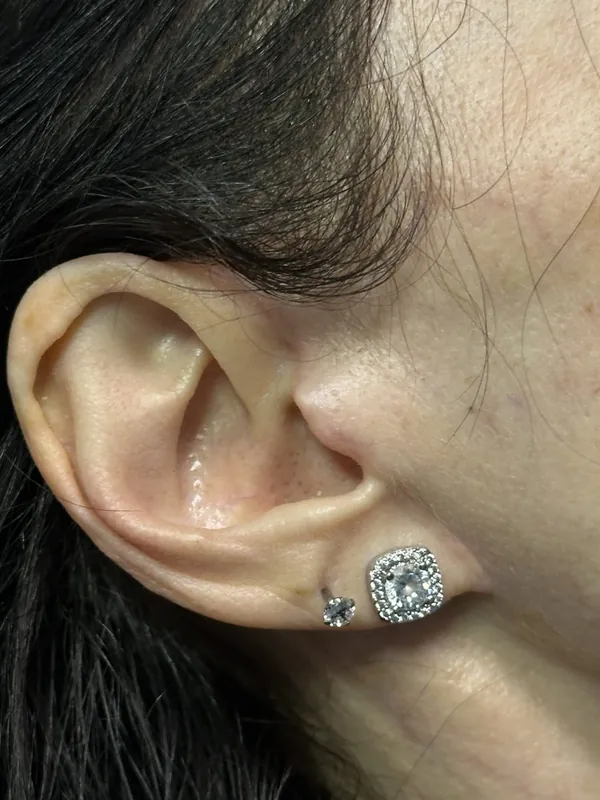
Where to look: the area around the ear
A healed facelift incision from my practice. The scar follows the natural contour in front of and around the ear, which is exactly where a rushed operation shows.
Questions to ask any surgeon
The surgeon matters more than the technique, and the structure around the surgery matters most of all. Ask these questions of every surgeon you consider, including me.
- Are you certified in plastic, reconstructive and aesthetic surgery, and which societies are you a member of?
- Which technique do you recommend for my face, and why that one rather than another?
- Will you personally perform the whole operation?
- Where exactly will I be operated on, and will I stay the night in hospital?
- How long will the operation take, and what is added to it, if anything?
- Can I see results at twelve months, not only in the first weeks?
- What are the complications you see, and how are they handled if they happen after I fly home?
- Is my quote in writing, and does it list exactly what is included?
Red flags
- A price before anyone has seen your photographs
- Pressure to decide quickly or pay a deposit today
- Guaranteed results or heavily filtered photos
- No named surgeon, or no clear plan for aftercare
Cost and how to get a quote
A deep plane facelift in Istanbul costs substantially less than the same operation in London, Germany or the United States. The difference is local operating costs, not the operation.
What shapes your quote
- Mid-face lift or full deep plane facelift
- Whether a neck lift, eyelid surgery, canthopexy or brow lift is added
- Operating time and the hospital stay
How to get your quote
Send your photographs
Front and profile views, relaxed and smiling. That is enough for a first opinion.
Video call
We talk through what you want, what your face needs, and your questions.
Written quote
You receive your plan and your quote in writing, listing exactly what is included.
 Illustration
About Dr. Aydınol
I completed my specialist training in plastic, reconstructive and aesthetic surgery at Dicle University (2012 to 2017) and have run my own practice in Istanbul since 2020. My work covers facial rejuvenation, rhinoplasty, breast surgery and body contouring, always with the same rule: the right procedure at the right time, or an honest no.
Patients from Germany, Italy, the United Kingdom, the Middle East and many other countries travel to Istanbul for surgery with me. My team and I plan the whole trip around the operation.
- 10,000+ procedures
- ISAPS member
- Turkish Society of Plastic Reconstructive and Aesthetic Surgeons
- Rhinoplasty Society of Europe
- Health Tourism Authorization, Turkish Ministry of Health
Your next step
Send a few photographs on WhatsApp. Tell me what bothers you most, and I will tell you honestly what I would recommend.
- +90 544 772 07 72
- info@mustafaaydinol.com
- Clinic
- Yeşilçimen Sokak No:12, Polat Tower Residence K:2 D:20, Fulya, Şişli, Istanbul
Keep a copy
Download the PDF to read offline or share it with someone who is coming with you.
Plan your trip
- Recovery plannerWhen you can fly home, work and exercise
- Surgery readiness checkWhat to settle before surgery
- When should I stopWhich medicines to stop, and when
- Combination plannerWhat can be done in one session
This guide is general information and does not replace a personal medical consultation. Your plan, the operation and your recovery depend on your own examination.