

A recessed chin is one of the most common reasons a face looks unbalanced in profile, and one of the least discussed. Patients usually come to me about something else: a nose that looks too big from the side, a neck that has lost its angle, a jawline that blurs into the neck in photographs. When I put their profile photograph next to the measurements, the missing piece is often the chin.
This page explains what a recessed or weak chin is, why it changes the whole profile, the four ways to bring it forward (filler, fat, an implant, or moving the bone), and how I perform a chin implant when an implant is the right tool. If your question is mainly about the nose, my rhinoplasty page covers that operation in full; this page is about the part of the profile below it.
What a Recessed Chin Is, and What It Is Not
Patients use several names for the same profile, and a few of them describe different problems:
- Recessed, receding or weak chin. The chin sits behind an imaginary vertical line dropped from the lower lip. The bone itself is small or set back, and the soft tissue follows it. This is the problem a chin implant is designed for.
- Recessed jaw. Sometimes used for the same thing, but in the strict sense it means the whole lower jaw sits back, and the teeth usually show it: the lower teeth close well behind the upper teeth. That is a bite problem first and a chin problem second.
- Short chin. The chin is small in height rather than in projection. Pushing it forward with an implant does not lengthen it.
- Double chin. Fat under the chin, not a small chin, although the two often appear together and a weak chin makes a double chin look worse. It is treated with double chin liposuction, sometimes in the same session as an implant.
- Asymmetric chin. One side longer or further forward than the other. An implant can hide a small asymmetry; a larger one needs the bone moved.
The distinction that matters most is the bite. If your teeth meet normally and only the chin is set back, the options on this page apply. If the lower teeth sit well behind the upper teeth, the right first conversation is with an orthodontist and a maxillofacial surgeon, because correcting the jaw corrects the chin with it.
Why the Chin Changes the Whole Profile
The chin is the lower anchor of the profile, and the eye judges every other feature against it. A weak chin makes a normal nose look larger, makes the lips look more prominent, and shortens the line from the chin to the neck, so the jawline and the neck lose their definition even in a slim person. That is why a small chin implant sometimes changes a profile more than a larger operation on the nose would.
It works the other way as well. A patient who asks for a neck lift because the neck has no angle sometimes has a perfectly reasonable neck and a short chin; the angle between the chin and the neck is set by the skeleton, and bringing the chin forward is the part of the plan that creates it.
Your Options: Filler, Fat, Implant or Moving the Bone
There are four ways to bring a chin forward, and a 2026 systematic review of 56 studies and 4,844 patients found that all of them can give a good result with high satisfaction, with different durability and different risks; none was clearly superior. The choice depends on how much projection you need, whether you want a permanent result, and what else is being done.
- Filler. Hyaluronic acid injected over the bone. Immediate, no downtime, and a good way to see what a stronger chin would look like on your face. It lasts months rather than years, it is limited to modest projection, and like any facial filler it carries a rare risk of injecting into a vessel. I use it for patients who want a small change or a trial before surgery.
- Your own fat. Fat taken by liposuction and injected over the chin, often at the same time as a rhinoplasty or a facelift. It feels completely natural, but part of it does not survive, so the projection it gives is moderate and not entirely predictable, and some patients need a second session. My views on how fat behaves in the face are on my page on fat transfer to the face.
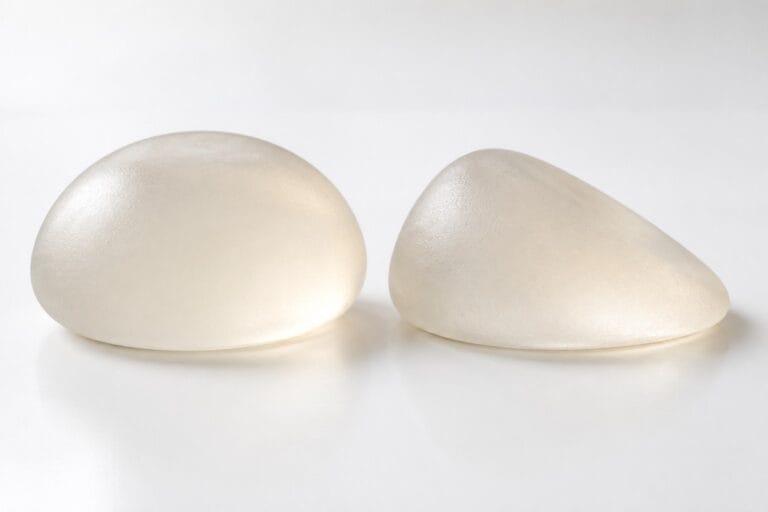
- A chin implant. A solid implant placed on the bone. Permanent, predictable, done in under an hour, and reversible if it ever needs to come out. This is the right tool for a chin that needs real forward projection with a normal bite.
- Moving the bone (sliding genioplasty). The front of the chin bone is cut, moved forward, down or up, and fixed with plates. It can lengthen or shorten the chin and correct asymmetry, which an implant cannot, and it uses no foreign material. It is a larger operation with a longer recovery and a higher risk of lasting numbness of the lower lip.
Chin Implant or Genioplasty: How the Decision Is Made
For a chin that is set back by a few millimeters to around a centimeter, with a normal height and a normal bite, an implant and a genioplasty give a similar profile, and the implant does it with a smaller operation. Small comparative studies have found the same: both work for mild and moderate deficiency, and the bone operation is the better choice when the deficiency is severe.
Moving the bone becomes the right answer when the chin is too short or too long as well as set back, when it is clearly asymmetric, when the deficiency is too large for an implant to look natural, or when the bite is part of the problem. I perform both operations, so the choice is made on what your chin needs, and I tell you which one fits at the photograph stage rather than offer an implant that cannot do the job.
The Operation as I Perform It
I generally use a silicone implant. It can go in through one of two routes, and we choose together: a short incision in the natural crease under the chin, where the scar sits in shadow and is rarely visible a few months later, or an incision inside the mouth, behind the lower lip, which leaves no visible scar. Either way, the implant goes into a pocket directly on the bone, under its lining, which holds it in place and prevents it from moving. I choose the size and shape from your measurements and from the look we have agreed on, and I check the profile on the table before closing.
On its own, a chin implant takes under an hour under general anesthesia, and you go home the same day; when it is part of a combined operation, it is done under the same anesthesia as the rest. There are no stitches to remove: inside the mouth they dissolve, and under the chin they sit beneath the skin. A chin support garment is worn for the first days.
Combining a Chin Implant With Other Operations
The chin is rarely the only thing a patient wants to change, and it combines well with the operations around it:
- Rhinoplasty. The most common combination. Balancing the nose and the chin together often means the nose needs less reduction than the patient expected. The details of the nose operation are on my rhinoplasty page and in the rhinoplasty guide.
- Double chin liposuction or a neck lift. Removing fat or tightening the neck and bringing the chin forward work on the same line; together they define the jawline more than either alone.
- Facelift. In an older face, a weak chin can be the reason the jawline never looked sharp; an implant can be added to a facelift under the same anesthesia.
- Buccal fat removal or cheek work. When the whole face is being rebalanced, as described on my page on buccal fat removal.
The combination planner shows which operations I plan together and in what order.
Your Week in Istanbul
- Before you travel: you send profile and front photographs, and I tell you whether an implant, fat, filler or a bone operation fits your chin, and what else in the profile is worth discussing.
- Day 0: examination, measurements and markings, the day before surgery when your arrival allows, otherwise on the morning of the operation.
- Surgery day: a chin implant alone is a day case under general anesthesia; combined with a rhinoplasty or a neck operation, you stay one night in the hospital.
- The following days: check-ups at the clinic; there are no stitches to remove.
- Flying home: after three to four days for a chin implant alone, and after the usual five to seven days when it is combined with a rhinoplasty.
Recovery
The chin is swollen and feels tight for the first week, and the lower lip may feel numb or stiff for a few weeks while the swelling settles. Most patients return to desk work after about a week. Soft food is easier for the first days, and contact sport waits about six weeks. The profile looks right at around one month and final at about three months, when the last swelling has gone and the soft tissue has settled over the implant.
Risks and Honest Limits
Complications are uncommon, and they depend on how the implant is placed. A systematic review of more than 3,100 patients with chin implants found low overall complication rates for the three common materials. Silicone had the lowest rate of numbness, 0.4 percent, against 20.1 percent for porous polyethylene. Implants placed on the bone under its lining moved and needed revision less often than implants placed in a two-layer pocket. Implants placed through the mouth were removed slightly more often than those placed through the skin under the chin (1.5 against 0.5 percent), mainly because of infection from the mouth, although they caused less asymmetry. A larger meta-analysis put the complication rate for silicone chin implants at 2.78 percent.
Bone changes under the implant are real and usually trivial. In a long-term radiographic study, 14 of 15 patients with silicone chin implants showed some erosion of the bone under the implant, at most 2 millimeters, and none had any symptoms. A more recent review argues that the problem has been overstated and that new bone formation around the implant is actually more common than erosion. I mention it because you will read about it; it is not a reason to avoid an implant.
An implant can be removed. If it ever becomes infected, moves, or you change your mind, it can be taken out through the same incision. That is a real advantage over moving the bone, which cannot be undone.
What an implant cannot do. It cannot lengthen or shorten the chin, correct a large asymmetry, or fix a bite problem; it cannot replace a neck lift when the neck skin is loose; and in a heavy neck it brings the chin forward without removing the fat under it. Any surgery can also bring bleeding, infection or a result that is not quite symmetrical. Unless there is an urgent reason, a revision waits six to twelve months after the first operation.
What Shapes the Price and What Is Included
- Implant alone or combined with a rhinoplasty, a neck operation or a facelift.
- An implant or a sliding genioplasty, and whether a hospital night is needed.
- Fat or filler instead of, or alongside, the implant.
- First operation or revision of an implant placed elsewhere.
Every quotation is all inclusive: the surgery, the implant, the hospital or clinic, the anesthesia, medication, your accommodation, airport and clinic transfers, and the follow-up visits in Istanbul. If you prefer to arrange your own hotel and travel, that is possible too. More about how the week is organized is on my page on plastic surgery in Turkey.
Before and After: How to Read the Photographs
A chin is judged in profile, so the photograph that matters is the side view, taken at the same distance, with the head in the same position before and after. A head tilted slightly down makes any chin look weaker and a head tilted up makes it look stronger, which is how many dramatic before and after pairs are made. Look for the same angle, the lips relaxed and the teeth together, and a photograph taken at least three months after surgery. My cases are in the before and after gallery, and I show more in a video consultation, because many patients do not want their faces published.
Send your photographs for an assessment. A profile photograph from each side and one from the front, in daylight, with your head level, your lips relaxed and your teeth together, plus your age and anything you would also like to change about your nose or neck. I will tell you whether an implant, your own fat, filler or a bone operation fits your chin, usually the same day. Send them on WhatsApp, +90 544 772 0772, or by email, info@mustafaaydinol.com, whichever you prefer.
Frequently Asked Questions
How do I know if I have a recessed chin?
Take a profile photograph with your head level and draw a vertical line down from your lower lip. In a balanced profile, the front of the chin touches or comes close to that line; a chin that sits well behind it is recessed. If your lower teeth also close well behind your upper teeth, the jaw may be the cause, and that needs a different assessment.
Can a weak chin be fixed without surgery?
Partly. Filler can add a modest amount of projection and lasts months; your own fat can add a moderate, longer-lasting amount. Neither gives the projection of an implant, and no exercise or posture change moves the bone.
Is a chin implant permanent?
Yes. The implant does not dissolve or wear out, and the result is stable once the swelling has settled. It can be removed if needed, which is not the case for a bone operation.
Will people be able to tell I have an implant?
Not when the size is chosen from your measurements and the implant sits on the bone. The usual mistake is an implant that is too large for the face, which is why the size is planned from your profile rather than chosen from a catalog.
Will there be a visible scar?
Not usually. Placed through the mouth, the implant leaves no visible scar; placed through the crease under the chin, it leaves a short scar that sits in shadow and fades over a few months. Implants placed through the mouth carry a slightly higher risk of infection, which is one of the points we weigh when we choose the route.
Can I have a chin implant with a nose job?
Yes, and it is the most common combination: both are done under the same anesthesia, and balancing the two often means the nose needs less reduction.
Is a chin implant better than a genioplasty?
For a chin that only needs to come forward, with a normal bite, an implant gives a similar result with a smaller operation and an easier recovery. A genioplasty is better when the chin also needs to be longer or shorter, when it is clearly asymmetric, or when the deficiency is large.
About the Surgeon
Dr. Mustafa Aydınol is a plastic, reconstructive and aesthetic surgeon practicing in Istanbul, a member of ISAPS and of the Turkish Society of Plastic Reconstructive and Aesthetic Surgeons. The practice holds Health Tourism Authorization from the Turkish Ministry of Health.
Sources
- Alwathnani YK, Alkhwildi LA, Almathami AA, et al. Surgical vs non-surgical chin augmentation: a systematic review of techniques, satisfaction, and complications. 56 studies, 4,844 patients; surgical and filler techniques both gave high satisfaction with different durability and risk profiles, and no technique was clearly superior. Aesthetic Plastic Surgery, 2026. DOI
- Liao CD, Rodriguez E, Zhao K, Kunda N, George F. Complications following alloplastic chin augmentation: a systematic review of implant materials and surgical techniques. 39 articles, more than 3,104 patients; numbness 0.4 percent with silicone against 20.1 percent with porous polyethylene; subperiosteal placement had less malposition, revision and removal than dual-plane placement; intraoral incisions had more removals (1.5 against 0.5 percent) but less asymmetry. Annals of Plastic Surgery, 2023. DOI
- Abdulaziz MKB, Kamal M, Kolaityte V, Aziz H. Complications of alloplastic facial skeletal implants in aesthetic surgery: a systematic review and meta-analysis. 48 studies, 3,701 patients, 4,139 implants; overall complication rate 10.7 percent; for chin implants, 2.78 percent with silicone. Journal of Plastic, Reconstructive and Aesthetic Surgery, 2025. DOI
- Sciaraffia CE, Ahumada MF, Parada FJ, Gonzalez E, Prado A. Bone resorption after use of silicone chin implants, long-term follow-up study with lateral chin radiography. 15 patients; 14 showed bone erosion of at most 2 millimeters, none with symptoms. Plastic and Reconstructive Surgery Global Open, 2018. DOI
- Madorsky SJ, Meltzer OA. Bone changes with silicone chin implants: clinical case, review, and considerations for technique modification. Bone formation is more common than resorption with silicone chin implants, and reported resorption has been overstated. Plastic and Reconstructive Surgery Global Open, 2025. DOI
- Nelke K, Kotela A, Majchrzak Z, et al. Autologous tissue grafts for chin augmentation with or without genioplasty: a systematic review. 17 publications; fat grafting improved contour with less predictable volume and occasional secondary sessions. Journal of Clinical Medicine, 2026. DOI
- Mohammad S, Dwivedi CD, Singh RK, Singh V, Pal US. Medpore versus osseous augmentation in genioplasty procedure: a comparison. 16 patients; both techniques worked for mild to moderate deficiency, and the bone operation was recommended for severe deficiency. National Journal of Maxillofacial Surgery, 2010. DOI
Related Posts
 Double Chin Liposuction in Turkey: Who It Suits, What I Add, and Recovery
 Breast Implant Profiles: Low, Moderate, High and Ultra-High, and How I Choose One for Your Chest
 Buffalo Hump: What Causes the Fat Pad at the Back of the Neck, and How It Is Removed
 Teardrop vs Round Implants: What Really Makes Breast Augmentation Look Natural