

Considering body surgery is a personal decision. You may be thinking about changes after pregnancy, the effects of weight loss, or changes you have noticed over time. Whatever brings you here, the starting point is understanding what matters to you and what you would like to discuss.
Below, I share real mommy makeover cases from my Istanbul practice, involving patients of different ages and backgrounds. You can explore the photographs and procedure combinations, then read about the surgical decisions and recovery in the detailed patient story.
How I Plan Each Patient’s Surgery
I begin with your concerns, your health and an assessment of your body. We discuss your priorities and the options appropriate to your situation before deciding on a combination of procedures. The cases below show different approaches to breast surgery and body contouring, with each patient’s recovery described separately.
Matching cases: 3
Mommy Makeover Patient Cases
Each section brings together a patient’s photographs and procedure details. The one-week photographs show an early stage of recovery; they should be read alongside the follow-up information for that case.
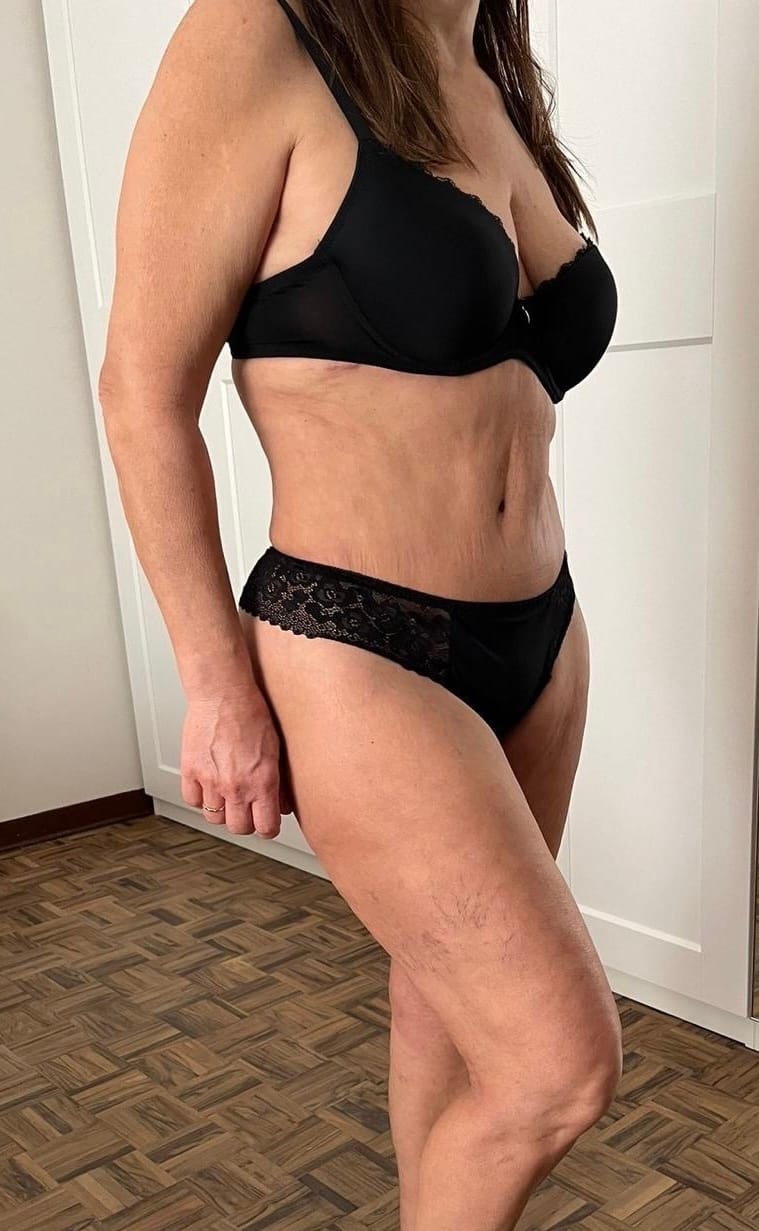
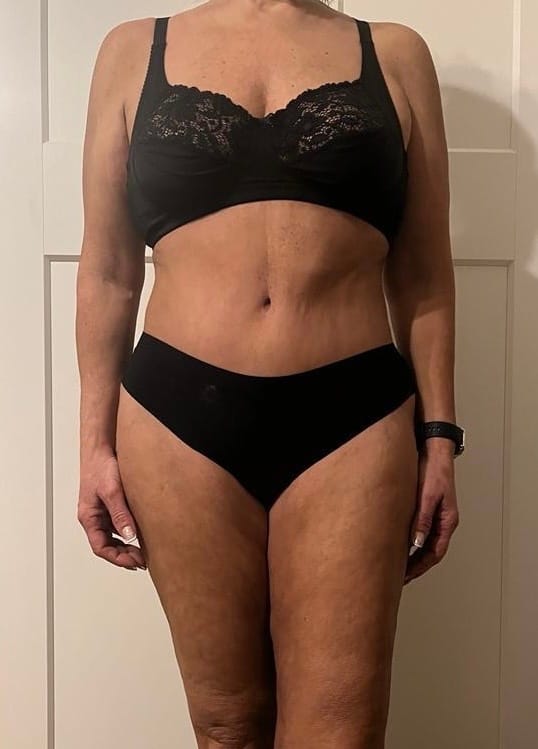
Mommy Makeover at 42 After Pregnancy
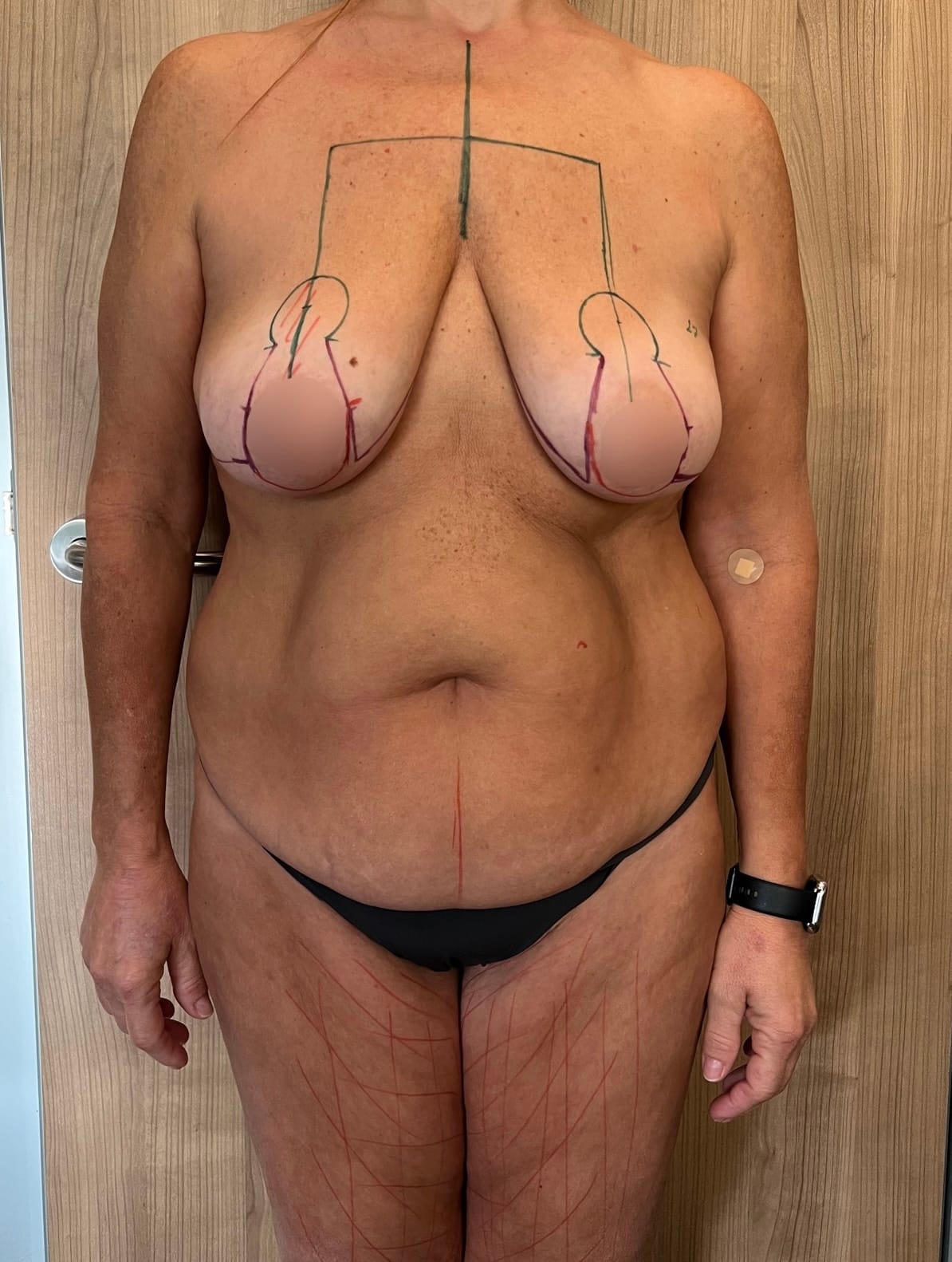
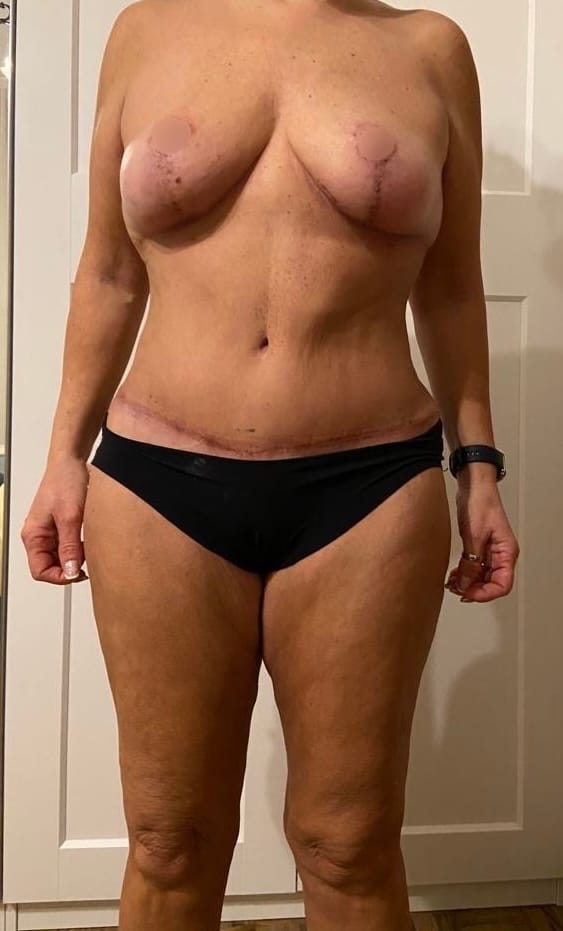
Patient: A 42-year-old mother of three, two years after her last pregnancy, with a stable weight for over a year.
She came to us with loose abdominal skin, a persistent abdominal bulge, changes in breast volume and position, and a loss of waist definition. Her plan addressed these concerns together.
Procedures: Full tummy tuck with muscle repair; VASER liposuction of the waist, flanks and back; Renuvion at the flanks; Breast lift with fat transfer.
The breasts were lifted and reshaped using her own tissue and transferred fat, without implants.
Use the arrows to view the photographs: the first image shows the preoperative markings; the following three show the patient after surgery.
Read this patient’s story: surgical decisions, recovery and outcome
A Detailed Case: A 42-Year-Old Mother
A 42-year-old mother with three children came to us two years after her last pregnancy. She had stable weight for over a year.
Her concerns: loose skin hanging below the navel, a bulge no amount of core training could flatten, breasts that had lost volume and dropped, and no visible waist.
There was a muscle separation (diastasis recti); the reason her abdomen bulged despite exercise. Skin below the navel had lost elasticity and showed stretch marks. The breasts showed moderate sagging with the nipple sitting at the fold, and good donor fat was available at the flanks and back.
Why Liposuction and Skin Tightening Was Not the Answer
This is the most common request we hear in consultations, and the most common misunderstanding we correct: “Can we do liposuction with skin tightening instead, so there is no scar?”
For the right patient, that combination is excellent. That is why we use VASER with Renuvion or Endolift in our practice. But it has limits, and this patient was well beyond them.
Liposuction removes fat; it does not remove skin. Energy-based tightening, Renuvion, Endolift, or similar devices – can shrink mildly loose skin by a modest degree; it cannot take up a hanging fold of stretched, striated skin below the navel, and no device on the market can.
And neither of them touches the abdominal wall: Muscle separation is a structural gap that only sutures can close.
In this patient, fat was actually the smallest of the three problems. A no-scar approach would have flattened her slightly, tightened her skin a little, and left her with the same bulge, the same hanging fold, and a scar-free disappointment. The reverse is also true: Tummy tuck alone would have removed the skin and repaired the muscle, but left the waist and back untouched, with an abrupt transition instead of a natural curve.
The plan must address skin, muscle and contour together with appropriate tools.
The Surgical Plan: One Session, Four Procedures
Before the steps, an important distinction. Tummy tuck with muscle repair and VASER liposuction of the waist and back, are the main procedures of nearly every mommy makeover in our practice, because loose skin, muscle separation and a lost waistline are what pregnancy most consistently leaves behind. Steps three and four were chosen for this patient’s specific needs; in another patient they might be replaced by different procedures, or not be needed at all.
1. Full tummy tuck with muscle repair
Excess skin between the belly button and pubic line was removed, and the separated muscles were stitched back together along the midline. The scar was placed low, positioned according to the underwear.
2. VASER liposuction of the waist, flanks and back
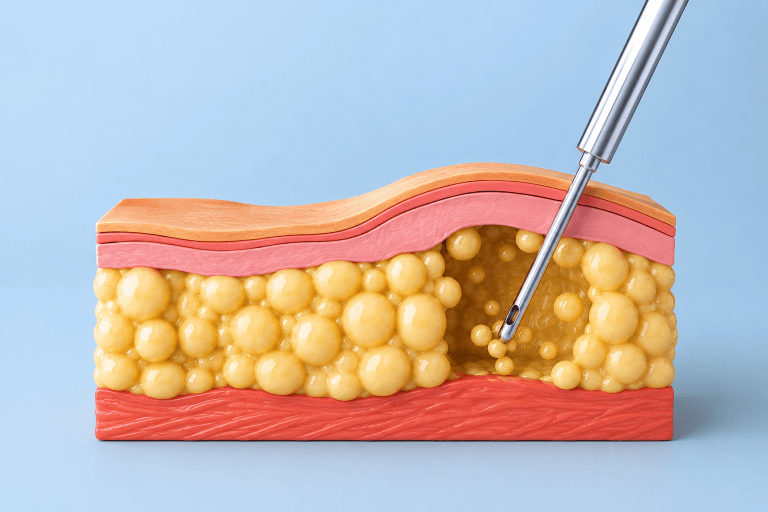
VASER’s ultrasound energy loosens fat before removal, which allows precise contouring around the waist and preserves the quality of the harvested fat. Afterwards, liposuction cannulas or MicroAire system can be used for fat removal. This 360-degree approach helps to add more definition to the waistline whereas a tummy tuck alone cannot.
3. Renuvion skin tightening at the flanks
This step is not part of every mommy makeover; it was added because this patient’s skin above the hips showed borderline laxity. That means not enough to cut, too much to ignore. Renuvion (J-Plasma) was applied under the skin in these zones to trigger tightening without additional scars. In smaller areas, laser-based tightening such as Endolift can serve the same role; in this case Renuvion covered the need.
4. Breast lift with fat transfer
The breast component of a mommy makeover varies most from patient to patient: some need only a lift, some need reduction, some need lifting and shaping using the existing tissue, some would like to add an implant, some no breast surgery at all. For this patient, rather than placing implants, the breasts were lifted and reshaped using her own tissue, and a portion of the purified fat harvested by VASER was transferred to restore upper-pole fullness. The result: lifted, natural breasts sized in proportion to her new waist, with no implant to maintain.
Why One Session Instead of Separate Surgeries?
One anesthesia, one hospital stay, one recovery period, one trip to Istanbul. For international patients this is not just convenience; it is the difference between one week away from home and three separate trips. Combined surgery is not suitable for everyone: it requires stable weight, good general health and normal pre-operative tests. But for suitable patients it is safe and efficient in experienced hands. This patient’s operation took around six hours.
Recovery: The First Week in Istanbul
She stayed two nights in hospital, walking with assistance from the first evening. Lymphatic massage started on day one and was repeated every other day. Drains were removed gradually as their output fell, the last around day four. Her final check-up and dressing were done on day six, and she flew home on day seven with spare dressing materials and a written plan.
At home: compression garment for six to eight weeks (daytime wear optional after day 21, nights mandatory), massage two to three times weekly, desk work from around week two, light cardio from week six, full gym from week eight. You can read the day-by-day detail in our tummy tuck recovery timeline and liposuction recovery guide.
You can also plan your own timeline with the recovery planner at the bottom of this page.
Outcome of the Detailed Case
By month three, swelling had largely settled: a flat abdomen, a defined waist, and breasts that matched the new silhouette. The final result of combined body contouring is judged between six and twelve months, as tissues keep healing. They fully soften and scars mature. What made the outcome work was not any single procedure but the proportions between them, which is exactly why a mommy makeover should never be sold as a fixed package. You can read more about the mommy makeover procedure we offer.
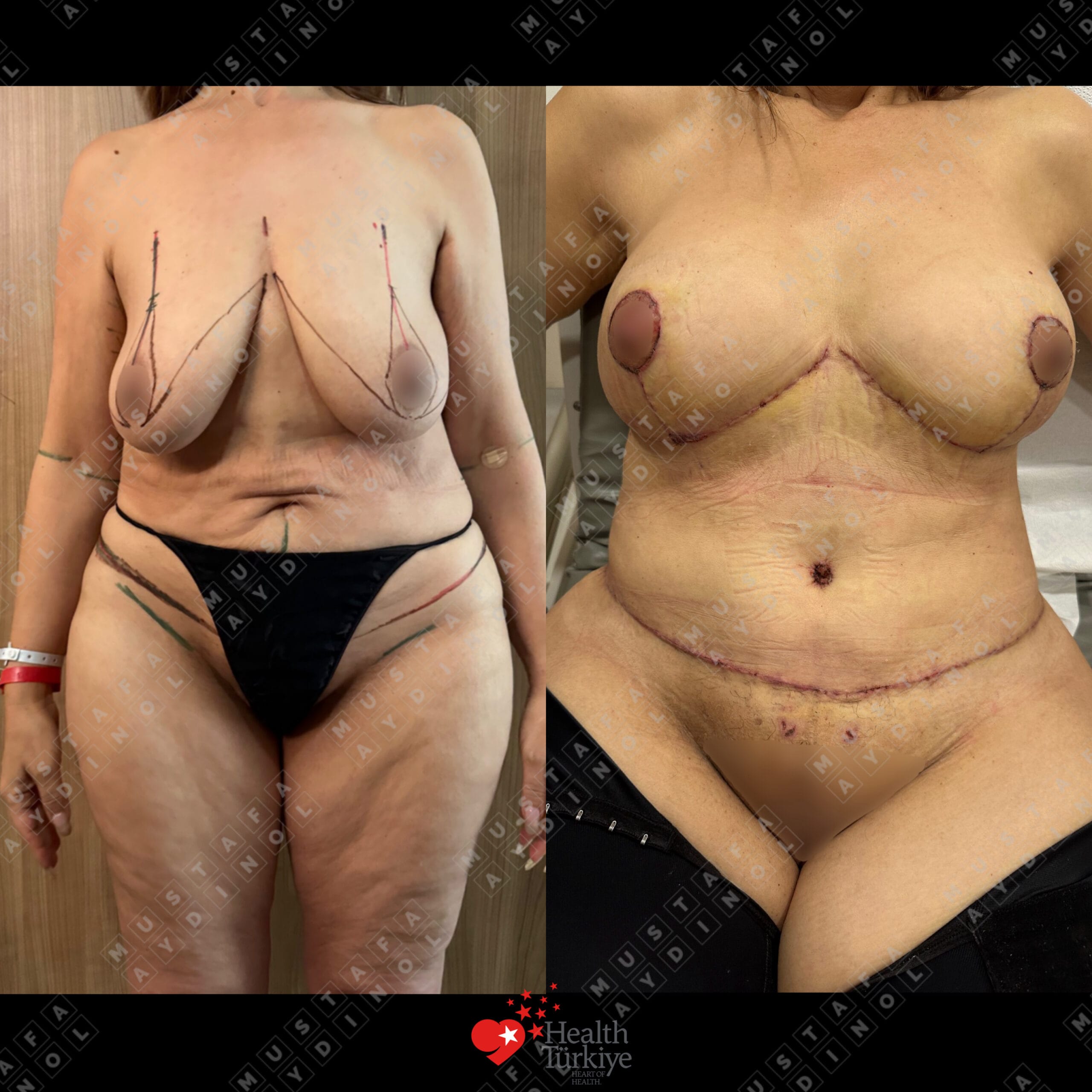
Mommy Makeover at 60
Patient age: 60.
Procedures: Full tummy tuck with a permanent abdominal wall repair; 360 liposuction and arm liposuction; Anchor breast lift without implants; Fat transfer to the buttocks, 750 cc per side; Renuvion skin tightening of the arms and back; Microneedling with nanofat for the face.
Implants: None. Her own breast tissue was sufficient to reshape the breast, and she did not want an implant.
Planned as later stages: thigh lift, then facelift.
Follow-up shown: One week after surgery, early postoperative photographs. Swelling is still present and the scars are at their earliest stage; updates are planned at six weeks, six months and twelve months.
Why it was done this way
Breast lift without implants. Two things have to be true for this to work: enough breast tissue to shape, and a patient who is comfortable with the size her tissue allows. Both were true. The anchor pattern was used for this degree of sagging; the tissue was repositioned and sutured internally so that the upper pole is filled by her own gland. There is no implant to maintain or replace. The trade-off is a longer scar and a breast size that stays what her tissue permits, which is exactly what she wanted.
Permanent sutures for the abdominal wall. At 60 there is no future pregnancy to plan for, so the abdominal wall was tightened with permanent braided sutures that hold the repair for good. In a younger patient who may still become pregnant I choose absorbable sutures instead; the 28-year-old case below shows that decision.
Liposuction with Renuvion instead of an arm lift, for now. Her upper arms had real skin laxity, the kind an arm lift treats. She wanted to try liposuction with Renuvion first, and I agreed on one condition: that she understood an arm lift may still be needed. Energy-based tightening improves mildly loose skin; it does not remove a hanging fold. That decision will be made at six months, not before.
Fat transfer and the face. 750 cc of purified fat per side is a moderate volume chosen for proportion, not for a dramatic silhouette; roughly half of transferred fat survives permanently. A small amount of the same fat was processed into nanofat and applied to the face with microneedling: a skin-quality treatment, not a lift.
Why the rest is staged. I do not combine a facelift with body surgery, and at 60 a shorter anesthesia and a recovery the body can absorb comfortably matter more than saving a trip. Thigh lift first, facelift after that, each once she has fully recovered.
Recovery. Two hospital nights, lymphatic massage from day one, drains out as their output fell, final check on day six, flight home on day seven. After the fat transfer there is no sitting ban: up to thirty minutes at a time is fine, with a BBL cushion for anything longer. Compression garment for six to eight weeks, supportive bra day and night for six weeks, desk work from around week two, light cardio from week six, full gym from week eight.
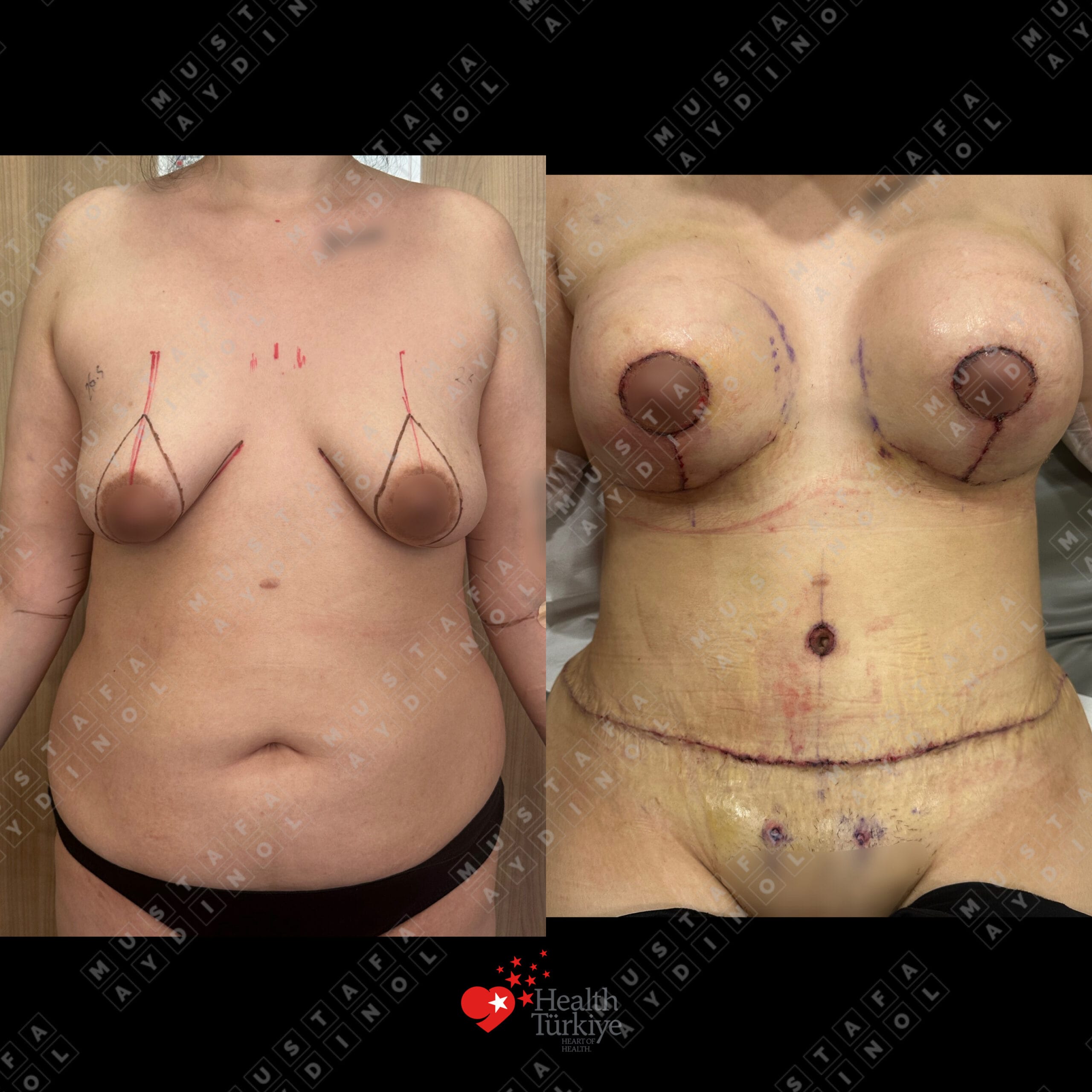
Mommy Makeover at 28 After 30 kg Weight Loss
Patient age: 28, mother.
Background: about 30 kg lost with a GLP-1 weight-loss medication after her pregnancies.
Procedures: Full tummy tuck with an absorbable fascial repair; Liposuction of the waist, flanks and back; Anchor breast lift with implants; Fat transfer to the buttocks, 1,200 cc per side.
Implants: 400 cc ultra-high-profile, placed under the fascia (above the muscle), with the lower-pole breast tissue kept as an internal support flap.
Follow-up shown: One week after surgery, early postoperative photographs. Swelling is still present and the scars are at their earliest stage; updates are planned at six weeks, six months and twelve months.
Why it was done this way
Why a tummy tuck and not liposuction alone. Skin stretched by 30 extra kilograms and then emptied does not contract back, and no energy device removes a hanging fold. Liposuction would have taken fat she no longer had and left the skin hanging looser. The tummy tuck was the honest answer; liposuction shaped the transition to the buttocks and provided the fat for the transfer. More on loose skin after weight loss.
Absorbable sutures for the abdominal wall. There was no muscle separation, only a lax fascia over the muscles, and it was tightened with absorbable sutures. She is 28, already has children, and may become pregnant again; an absorbable repair holds while the tissue heals and then lets the abdominal wall stretch naturally if it needs to. A permanent suture line would resist that stretch. In the 60-year-old case above the reasoning is reversed.
Implants under the fascia, not under the muscle. Her breast tissue was thick enough to cover an implant on its own, so the 400 cc implants went under the fascia of the chest muscle rather than beneath the muscle. Subfascial placement avoids movement of the breast when the muscle contracts and gives a faster recovery; it is only possible when the tissue is thick enough to conceal the implant edge. The tissue from the lower part of the breast was kept as an internal support flap under the implant, so that the weight is carried by her own tissue rather than by skin alone. The anchor pattern was needed for this degree of sagging.
Fat transfer, 1,200 cc per side. Weight loss had flattened her buttocks. A large volume was possible because she had enough donor fat and enough tissue to receive it; roughly half of transferred fat survives permanently, so the shape at three months is closer to the final one than the shape at one week.
The one thing that protects this result. GLP-1 medication is a treatment, not a cure. Weight that returns after the medication stops will stretch a tummy tuck and change a breast. That was discussed before surgery.
Recovery. Two hospital nights, lymphatic massage from day one, drains out as their output fell, final check on day six, flight home on day seven. No sitting ban after the fat transfer: up to thirty minutes at a time, with a BBL cushion for anything longer. Compression garment for six to eight weeks, supportive bra day and night for six weeks, desk work from around week two, light cardio from week six, full gym from week eight.
For before-and-after photographs across other procedure groups, visit the Before and After Gallery.
Is a mommy makeover in Turkey safe?
Safety depends on patient selection, planning and infrastructure: These are full pre-operative testing, surgery in a fully equipped hospital, an experienced anesthesia team, and honest suitability criteria. Our practice operates with Turkish Ministry of Health health tourism authorization, and combined cases are only offered to patients who meet the criteria.
How many days do I need in Istanbul?
Seven days covers even large combined cases: arrival, surgery, two hospital nights, drain removal, massage sessions and a final check-up before flying home.
Tummy tuck or liposuction after pregnancy? Which one do I need?
It depends on what pregnancy actually changed. If the problem is fat only, liposuction may be enough. If there is loose skin or muscle separation, which is very common after multiple pregnancies, a tummy tuck is the part that fixes it, and liposuction shapes what remains.
When will I see the final result?
The main improvement is visible immediately, most swelling settles by month three, and the final result of combined surgery is evaluated at six to twelve months.
If you are considering a mommy makeover and want to know which combination fits your body, send us your photos for an assessment or reach us directly: +90 544 772 07 72 (call or WhatsApp).
This article is for general information and reflects the surgical approach and aftercare protocol of Dr Mustafa Aydınol’s practice in Istanbul. It does not replace an individual medical consultation.
Recovery planner
Plan your surgery trip, day by day
Choose your procedure, add a surgery date if you have one in mind, and see your whole journey on real dates - hospital nights, hotel nights, the flight home, and when normal life resumes.
Procedure
Fit to fly
Where are you in recovery?
Good to know
Recovery does not end when you fly home
How well you look after yourself after you leave matters as much as the surgery itself. Most of the problems we see are preventable ones - massage that was skipped, compression given up too early. Your part of the plan continues at home.
Especially after liposuction. The sessions in Istanbul are only the start; continuing two to three times a week at home lowers the risk of fluid build-up and firmness. A simple handheld device works if a clinic is too costly.
Overnight above all, for at least six to eight weeks. The comfort of leaving it off is never worth a result that is harder to undo. With implants, support matters until healing settles.
If your recovery is not going the way you expected, reach out early rather than waiting. A small issue caught in time is easily managed; left alone, it grows. We would always rather hear from you.
When to seek help straight away
Recovery has its ups and downs, and some swelling, bruising and discomfort are all normal. But a few signs need urgent attention. If any of these happen - especially in the first weeks, when you may still be travelling - do not wait:
- Sudden shortness of breath or chest pain
- Pain, swelling, warmth or redness in one calf or leg
- A fever, chills, or feeling generally unwell
- Fast-increasing pain, swelling or bruising
- Heavy or bright-red bleeding, or fluid soaking through dressings
- A wound that opens, or looks red, hot and increasingly sore
Sudden breathlessness or chest pain is an emergency - call your local emergency number first, then tell us. For anything else on this list, contact us straight away; we would always rather hear from you early.
Talk it through on WhatsApp
Every recovery is different - your technique, your health, your travel dates, and whether you are combining procedures. Send us your plan on WhatsApp and Dr. Aydinol's team will go through your timeline with you.
Please tick the consent box so we can open WhatsApp.
These timings reflect how we plan a straightforward recovery and are guidance rather than a promise; your own plan is confirmed with you in person, and your travel date at your final check-up before you leave. If anything about your recovery ever feels wrong, contact us first - that is what the direct line is for.