

What happened
On 1 September the American Society of Plastic Surgeons published its 2025 procedural statistics: 1.52 million cosmetic operations, up 7 percent on the year, built from member data and a national insurance-claims set covering more than 3,000 board-certified surgeons. The headline numbers have been everywhere: facial fat grafting up 39 percent, eyelid surgery up 19 percent, breast augmentation up 11 percent, patients over 66 up 24 percent.
The numbers that matter more are further inside the report. Rhinoplasty fell 5 percent, reversing two years of growth. Brazilian butt lifts fell 5 percent, a decline the report describes as running across multiple age groups. Gynecomastia surgery fell 8 percent. Patients aged 18 to 25 had 9 percent fewer operations than the year before, and 26 to 35 had 5 percent fewer. Asked what drives their patients, 75 percent of surgeons put restoration after a life change, pregnancy, aging or major weight loss, in first place, well ahead of aesthetic enhancement at 67 percent.
Read together, that is not a report about a specialty growing. It is a report about a specialty changing who it serves and why. The same pattern reaches my WhatsApp in Istanbul, and it is worth explaining what it means for a patient planning surgery now.
The common misconception
The misconception is that plastic surgery is a young person’s pursuit driven by trends: a nose everyone wants this year, a body shape from a feed, a cheek defined by a celebrity. The numbers say the opposite is happening. The procedures most tied to a look, rhinoplasty, buttock augmentation with fat, large implants, are flat or falling, and the age groups most exposed to feeds are having less surgery, not more. The procedures growing are the ones that put something back: eyelids, lifts, fat where fat was lost, breasts after pregnancy or weight loss, and all of it most strongly in patients past fifty.
This is a United States report, and the international picture is not identical. The ISAPS global survey for 2025, published at the end of September and covering 17.9 million operations, points the same way with different engines. Eyelid surgery rose 16 percent to 2.46 million and is now the most performed operation in the world; breast lift rose 48 percent, brow lift 24 percent, neck lift and arm lift 13 percent each, and the body lifts between 22 and 39 percent. On the other side, rhinoplasty fell 6 percent, buccal fat removal 24 percent, lip procedures 15 percent, facial bone contouring 15 percent, and hyaluronic acid filler treatments 25 percent. Two procedures the American numbers celebrate were flat worldwide: facial fat grafting and the facelift itself barely moved. So the American surge in fat grafting is an American story; the retreat from designed features and the growth of restoration are a global one.
The clinical reality
Restoration is a different kind of surgery from transformation, and it is planned differently. A patient asking for a feature they never had is asking me to design something. A patient who has lost 30 kilograms, or had three children, or turned 64, is asking me to return something, and the reference point is not a photograph of someone else but a photograph of herself ten years ago. That changes the consultation: I need the old photograph, the timeline of the change, and an honest account of what the patient’s own tissue can still do. It also changes what a good result looks like. The best restoration is the one nobody notices.
The weight-loss patient is now the center of the specialty, and the report says so twice. Eighty-two percent of surgeons received consultation requests connected to GLP-1 weight-loss medication in 2025. For the body, the procedures those patients asked about were tummy tuck (88 percent of surgeons), breast surgery (87), arm lift (84) and thigh lift (80). For the face, facelift (71) and neck lift (64). The report is careful to say consultation is not surgery, and one number proves it: tummy tuck volume rose only 2 percent despite being the most discussed operation. Patients are asking early and operating late. That is the right order, and it is the order I insist on: weight stable for months, nutrition checked, then a plan. I have written about the face version of this on the timing of a facelift after weight loss and about the male body after weight loss, where the same pipeline applies.
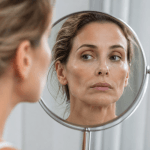
The face is being restored, not redesigned. Every facial procedure that restores grew by double digits: eyelids 19 percent, facelift 13, neck lift 21, brow lift 29, fat grafting 39. The one facial procedure that redesigns, rhinoplasty, fell. Inside the age tables the split is sharper: in patients aged 36 to 45, facelifts rose 55 percent and neck lifts 45 percent while liposuction and tummy tuck fell; in the 26 to 35 group, facial fat grafting more than doubled from a small base. Younger adults are moving from body contouring to facial restoration, and they are doing it earlier than the generation before them. My own view on the fastest-growing item is in the fat transfer article: fat restores volume, it does not lift, and the two questions have to be asked separately.
Older patients are the growth, and they need a different kind of care, not a different kind of surgery. The 66-and-over group grew 24 percent, the 56 to 65 group 15 percent. In the oldest group eyelid surgery is the most common operation, and breast augmentation rose 34 percent, which surprises people who assume older patients only want their faces done. What changes at this age is not the operation but the preparation: medications that interact with anesthesia and bleeding, blood pressure and blood sugar that must be controlled, a heart and lungs that need to be assessed rather than assumed, a longer recovery and a companion for travel. This is the reason I built the surgery readiness check on this site: it asks the questions a 68-year-old should be asked before booking a flight, not after landing.
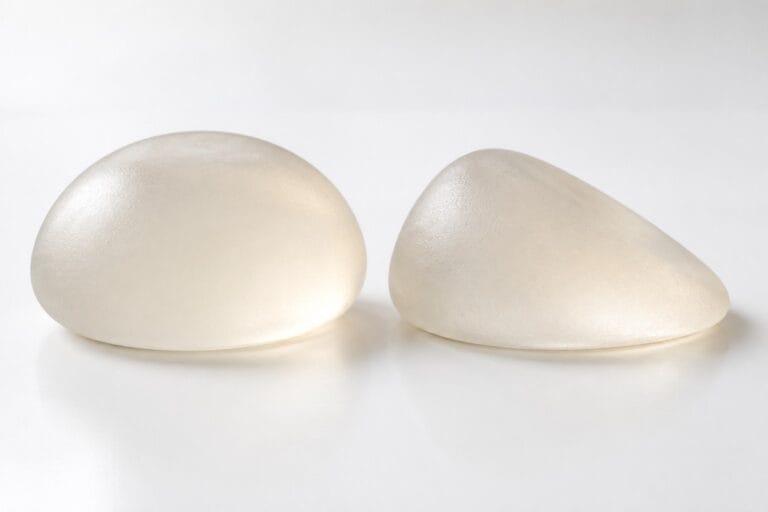
Moderation has reached the operating table. In the breast data, 36 percent of surgeons saw patients choosing smaller implants than in previous years, 12 percent saw larger, and the most used range was 300 to 400 cc. Implant removals were flat, so this is not a wave of regret; it is new patients choosing differently. I wrote about how to choose an implant size before this report existed, and the numbers have moved toward that argument, not away from it.
What I see in Istanbul matches. The proportion of patients writing to me after major weight loss, the age of the patients asking about facelifts and eyelids, the retreat from oversized implants and from buttock augmentation, the drop in patients under 30 asking for a nose that belongs to someone else: all of it is in my consultation notes before it was in this report. International patients are not a separate species. They read the same feeds and lose the same weight; the difference is that they have to plan the trip, which is one more reason to plan the surgery properly.
The practical takeaway for patients
If your reason for surgery is to get back something you had, say so in the first message and send the older photograph with the current ones. It changes the plan more than any other single piece of information.
If you have lost a lot of weight, tell me how much, over how long, and whether the weight has been stable for at least three months. If you take a weight-loss medication, name it; I will not put it in writing on this site, but I need it in the consultation.
If you are over 60, do the readiness check before you ask for a quote. The questions it asks are the questions that decide whether surgery is safe for you, and the answers take five minutes to gather at home and a week to gather from a hospital bed.
If you are under 30 and the operation you want is on a list of this year’s procedures, wait a year and see if you still want it. The data say many of your peers are doing exactly that.
Honest limits
This is one country’s data, projected from a partner insurer’s claims and a member survey, and the motivation figures come from surgeons describing their patients, not from patients themselves. Percentages on small procedures swing hard: a 111 percent rise in facial fat grafting among 26-to-35-year-olds is 607 operations becoming 1,284. The report itself repeats that consultation numbers and procedure numbers are not the same thing, and that the GLP-1 data do not establish causation. The ISAPS global figures are a survey of plastic surgeons, extrapolated, and depend on which surgeons answered; this article was updated with the 2025 survey when it was released. What I have added from my own practice is observation, not a dataset. I intend to publish one, country by country, later this year.
If you are trying to work out whether what you want is restoration or transformation, and whether it is realistic, send unedited photographs and the story behind them to +90 544 772 0772. The surgical team reviews them the same day.
Dr. Mustafa Aydınol is a plastic, reconstructive and aesthetic surgeon in Istanbul and a member of ISAPS.
Sources
- American Society of Plastic Surgeons. 2025 Plastic Surgery Statistics Report: 1,523,330 cosmetic surgical procedures, age, gender, regional and motivation tables. September 2026. Link
- American Society of Plastic Surgeons. Lift procedures led growth as demand for restoration drove plastic surgery in 2025, press release, 1 September 2026. Link
- International Society of Aesthetic Plastic Surgery. ISAPS International Survey on Aesthetic/Cosmetic Procedures Performed in 2025: 17.9 million surgical and 17.3 million non-surgical procedures, procedure-level changes versus 2024. Published 29 September 2026. Link
- International Society of Aesthetic Plastic Surgery. ISAPS International Survey on Aesthetic/Cosmetic Procedures Performed in 2024, full report, cited in the original version of this article. Link