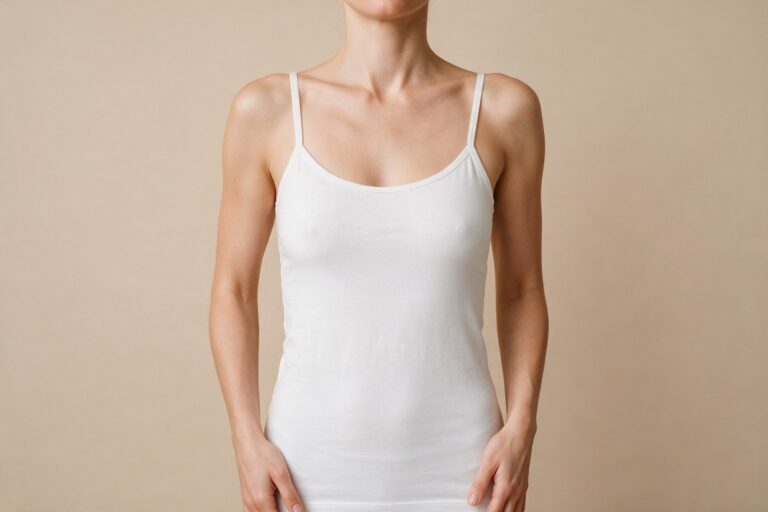


Love handles are the fat pads that sit above the hip bones at the sides and back of the waist, the part that folds over a waistband. Almost every patient who asks me about them has the same story: the weight came down, the stomach got flatter, and the love handles stayed. Some have been doing side planks for years.
This page explains why that happens, what actually reduces love handles and what does not, and how I remove them surgically when that is the right answer. If you already know you want liposuction, my page on liposuction in Turkey covers VASER, Lipo 360 and HD liposuction in full. This page is for the decision before that one.
What Love Handles Are, and What They Are Not
Patients use several names for the same area, and a few of them describe different things:
- Love handles. Subcutaneous fat over the flanks, between the lower ribs and the hip bone, wrapping from the side of the waist toward the back. In men it often continues as a roll above the belt.
- Muffin top. The same fat, described by what it does over a tight waistband: it spills over. Often the term also includes the lower abdomen at the front.
- Flanks. The surgical name for the area. “Flank liposuction” and “love handle liposuction” are the same operation.
- Hip dips. Not fat at all, but a hollow below the hip bone where the bone and muscle sit. Treated by adding fat, not removing it.
- Back rolls and bra-line fat. Higher up, under the shoulder blades. Often treated in the same session as the flanks because the two blend into each other.
One distinction matters more than the names. Love handles are fat under the skin, which liposuction can reach. Fat inside the abdomen, around the organs, pushes the whole waist outward and cannot be suctioned; it responds to weight loss, not surgery. If your waist is round all the way around and firm when you press it, the problem is mostly inside. If you can pinch a soft fold at the sides, the problem is love handles.
Why Love Handles Resist Diet and Exercise
The body does not lose fat where you exercise it. This has been tested directly. In a controlled study, volunteers trained one leg with 960 to 1,200 repetitions per session for twelve weeks. Fat mass fell, but not in the trained leg; it fell in the trunk and arms (Ramírez-Campillo 2013). Side planks and oblique crunches build the muscle under the love handle, which is worth doing, but they do not empty the fat above it. The idea of “spot reduction” is one of the most persistent myths in fitness, and the evidence against it is consistent.
Where you store fat is largely decided by sex hormones and genes. Men tend to store fat around the trunk and flanks; women more often store it on the hips, thighs and buttocks, with the flanks joining after menopause or with weight gain (Karastergiou 2012). Fat cells in different regions behave differently: they differ in how readily they release fat and how they respond to hormones. The flank is, for many people, the depot that fills first and empties last.
Dieting shrinks every fat cell, including the ones you want to keep. When you lose weight, you lose it everywhere in roughly your personal pattern. Someone who stores fat preferentially on the flanks ends up thinner all over with the same silhouette, just smaller. This is the patient I see most often: a healthy weight, a good routine, and a stubborn pair of love handles that no longer match the rest of the body. That is exactly the situation liposuction was designed for: shape, not weight.
What Does Not Remove Love Handles
Targeted exercise. See above. Strengthen the core for your back and posture, not to melt the flanks.
Waist trainers and corsets. They compress the area while worn and can leave marks. They do not remove fat cells, and there is no evidence that they change body shape once removed.
Creams, wraps and “detox” products. No topical product removes subcutaneous fat.
Fat freezing (cryolipolysis). This is the one non-surgical method with real data behind it, so I want to be fair. A systematic review of 19 studies found average reductions of 14 to 28 percent in the pinch thickness of the treated fat per treatment, with mostly mild short-term side effects (Ingargiola 2015). That is a modest change in a small, pinchable pocket; it usually needs repeat sessions, and it cannot shape the waist as a whole or treat the back at the same time. I do not offer fat freezing in my practice. For a patient with a small, isolated love handle and no wish for surgery it can be reasonable. For a patient who wants a visibly different waistline, it is not.
GLP-1 weight-loss medication. It is very effective for weight, and I am seeing more patients after it. But it reduces fat in your personal pattern, like any weight loss, and it can leave the skin over the flanks loose. If you are on it, finish losing, hold a stable weight for four to six months, and then we look at what is left.
What Does Remove Them: Flank Liposuction
Liposuction removes the fat cells themselves. The cells that are removed do not grow back, which is why the change in shape is lasting as long as your weight stays within a few kilograms of where it was at surgery. In my practice this is almost never a “flanks only” operation, for a reason that becomes obvious once you see it: a flat front with full sides looks wrong from every angle except the mirror, and treated flanks next to an untreated lower back leave a step. The usual plan is the waist as a circle, the abdomen, flanks and lower back together, which is what the term Lipo 360 describes. For a patient whose abdomen is already flat, flanks and lower back alone is a sound plan.
Two findings from the research shape how I counsel patients. First, in a randomized trial of small-volume liposuction, total body fat had largely returned a year later in women who did not change their habits, and it returned to the abdomen rather than the treated thighs (Hernandez 2011). The treated area stayed slimmer; the body defended its total fat elsewhere. The lesson is not that liposuction fails; it is that the result belongs to a patient who keeps her weight stable, and that treating the waist as a whole rather than one strip of it gives the most durable-looking shape. Second, in a prospective cohort of 31,010 liposuction procedures, liposuction performed alone had a major complication rate of 0.7 percent, and adding other operations in the same session raised the risk (Kaoutzanis 2017). That is why I plan combinations carefully rather than stacking everything into one day.
The Operation as I Perform It
Flank liposuction is done under general anesthesia in an accredited hospital in Istanbul, with an anesthesiologist present throughout. The treated areas are first filled with a dilute anesthetic and adrenaline solution to limit bleeding and pain. I then use VASER, an ultrasound probe that loosens the fat before it is suctioned, and MicroAire, a power-assisted cannula, which I prefer in dense and fibrous fat such as the back. The entrances are a few millimeters long and are placed inside the natural creases and the underwear line.
I remove as much as the plan needs and as much as can be removed safely in one operation; I do not spread liposuction over several sessions. Where the skin over the flanks is mildly loose, I can add Renuvion, a plasma-energy device applied under the skin at the end of the liposuction, or Endolift, a thin laser fiber, or both, to help it tighten. Where the skin is truly loose, after major weight loss for example, no amount of liposuction fixes a fold of skin, and the honest answer is an extended tummy tuck or a body lift. My guide to loose skin after weight loss explains how I decide.
Men ask about this operation as often as women, usually after reaching a good weight through training and finding that the belt line has not changed. Male flank fat is often firmer, and depending on the case I use the power-assisted cannula or classic liposuction there. One difference matters: in a man I deliberately do not empty the flanks completely. A waist that is too narrow looks feminine on a male frame, so the goal is a straighter line from the ribs to the hips, not an hourglass. The skin usually retracts well because it has not been stretched by pregnancy.
Your Week in Istanbul
- Day 0: examination and markings, surgery, one night in the hospital.
- Days 1 to 4: hotel with check-ups. Drains, when used, come out around day three. You walk from the first day, wear the compression garment, and have two to three lymphatic massage sessions in Istanbul when liposuction is the main procedure.
- Day 5 or 6: final check and flight home.
Recovery
Bruising and a deep muscle-soreness feeling are normal in the first week. Desk work is realistic within about a week, light cardio from weeks three to four, and full training, including core work, at week six. The compression garment is worn for six to eight weeks; after the third week it can come off during the day if you prefer, but it stays on at night. The waist looks slimmer immediately, then swells, then settles over three to six months as the skin retracts. Swelling at the flanks and lower back is often the last to go. The day-by-day protocol is in my liposuction recovery timeline, and you can build a personal plan with the recovery planner.
Risks and Honest Limits
The risks of flank liposuction are those of liposuction in general: bruising, swelling, fluid collection, contour irregularity or asymmetry, infection, and, rarely, blood clots. The flanks and back are forgiving areas because the skin there is thick, but they are also where an over-aggressive surgeon leaves grooves and waves that are difficult to correct. I would rather leave a little fat than remove too much; an over-treated flank cannot be put back. If you have had liposuction elsewhere and the result is uneven, read my section on revision liposuction; I wait six to twelve months after the previous operation before correcting it.
The limits are simple. Liposuction treats fat under the skin, not fat around the organs, so a round, firm waist does not become narrow. It does not tighten a fold of loose skin. It does not change the width of your pelvis or rib cage. And if your weight rises afterwards, the remaining fat cells, in treated and untreated areas alike, enlarge, and the contour softens.
What Shapes the Price and What Is Included
- The number of areas treated: flanks alone, flanks with the lower back, or the full waist circle.
- The technique used: VASER, power-assisted, and whether Renuvion is added for the skin.
- Whether it is part of a combined session, for example with a tummy tuck or fat transfer.
- The hospital stay: one night for liposuction alone, two for most combined body sessions.
Every quotation is all inclusive: the surgery, the hospital stay, the anesthesia, medication, the compression garment, your accommodation, airport and clinic transfers, and the follow-up visits and post-operative contact in Istanbul.
Before and After: How to Read the Photographs
Waist photographs are the easiest in plastic surgery to flatter. Lighting from above, a slight twist of the torso and pulled-in abdominal muscles make an unchanged body look sculpted. Compare the same view, standing relaxed, in the same light; look at the back view, which is where love handles live and where most galleries do not look; and ask when the after photograph was taken, because at six weeks the flanks are still swollen and the honest photograph is at six months. Look for a patient whose weight and skin quality resemble yours. My results, with the areas treated and the time since surgery, are in the before and after gallery.
Send your photographs for an assessment. Front, back and both sides, standing relaxed, in underwear, in daylight, with your height, weight, and whether your weight has been stable for the last six months. I will tell you whether the flanks alone are enough, whether the waist should be treated as a whole, and whether your skin will follow. Send them on WhatsApp, +90 544 772 0772, or by email, info@mustafaaydinol.com, whichever you prefer.
Frequently Asked Questions
Can you get rid of love handles with exercise?
You can lose fat overall with exercise and diet, and your love handles will shrink in proportion. You cannot direct the loss to the flanks: a controlled study that trained one leg intensively for twelve weeks found the fat loss happened in the trunk and arms, not in the trained leg. Core exercise is good for your back; it is not a treatment for love handles.
Does fat freezing work on love handles?
Partly. A systematic review found average reductions of 14 to 28 percent in the pinch thickness of a treated pocket per session. That is useful for a small, isolated pad in someone who does not want surgery. It does not shape the waist as a whole, and I do not offer it.
Is love handle liposuction a big operation?
No. It is one of the smaller liposuction plans, usually done in a single session with one night in the hospital and a flight home on day five or six. In a cohort of 31,010 liposuction procedures, liposuction performed alone had a major complication rate of 0.7 percent.
Will the fat come back?
The cells that are removed do not return. If your weight rises, the remaining cells everywhere enlarge and the waist softens again. In one trial, women who did not change their habits regained total body fat within a year, mostly at the abdomen, while the treated area stayed slimmer. Keep your weight stable and the result lasts.
Is it the same for men?
Yes. The technique is the same, chosen case by case, and the skin usually retracts well. The goal is different: in a man I leave some fullness at the flanks on purpose, because a waist that is too narrow looks feminine on a male frame.
Love handles or a tummy tuck?
If the problem is fat with reasonably firm skin, liposuction. If there is a fold of loose skin, especially after pregnancy or major weight loss, liposuction alone will leave the fold, and a tummy tuck, often with liposuction of the flanks in the same session, is the honest plan.
How long do I need to stay in Turkey?
Five to six days: one night in the hospital, hotel with check-ups and massage sessions, and a final check before you fly.
About the Surgeon
Dr. Mustafa Aydınol is a plastic, reconstructive and aesthetic surgeon practicing in Istanbul, a member of ISAPS and of the Turkish Society of Plastic Reconstructive and Aesthetic Surgeons. The practice holds Health Tourism Authorization from the Turkish Ministry of Health.
Sources
- Ramírez-Campillo R, Andrade DC, Campos-Jara C, et al. Regional fat changes induced by localized muscle endurance resistance training. 12 weeks of single-leg training; fat fell in the trunk and arms, not in the trained leg. Journal of Strength and Conditioning Research, 2013. DOI
- Karastergiou K, Smith SR, Greenberg AS, Fried SK. Sex differences in human adipose tissues: the biology of pear shape. Review of why men and women store fat in different regions. Biology of Sex Differences, 2012. DOI
- Ingargiola MJ, Motakef S, Chung MT, Vasconez HC, Sasaki GH. Cryolipolysis for fat reduction and body contouring: safety and efficacy of current treatment paradigms. Systematic review of 19 studies; caliper reduction 14.7 to 28.5 percent. Plastic and Reconstructive Surgery, 2015. DOI
- Hernandez TL, Kittelson JM, Law CK, et al. Fat redistribution following suction lipectomy: defense of body fat and patterns of restoration. Randomized trial, 32 women; body fat restored by one year and redistributed to the abdomen while the treated thigh stayed reduced. Obesity, 2011. DOI
- Kaoutzanis C, Gupta V, Winocour J, et al. Cosmetic liposuction: preoperative risk factors, major complication rates, and safety of combined procedures. 31,010 procedures; liposuction alone 0.7 percent major complications. Aesthetic Surgery Journal, 2017. DOI