

A BBL today is not the operation people read about a decade ago. Where the fat is placed, how it is placed and what is used to guide the instrument have all changed, and the result is a procedure that shares its name with the old one and very little else. The technique moved on, and the safety record moved with it.
Most of what patients actually want to know is about shape rather than method: whether they have enough fat to work with, how much of it lasts, when they can sit normally again, and how much the waist changes. Those are the right questions. This page answers them, and explains how I perform the operation along the way.
A BBL Is Two Operations in One
The name describes only half of what happens. A BBL is liposuction first and a fat transfer second, and in most patients the liposuction is what changes the silhouette more.
Fat is harvested from the waist, flanks, back and often the abdomen and inner thighs, processed to separate viable fat cells from blood and fluid, and then injected into the buttocks in fine layers. The waist narrows because fat was removed from it. The buttock projects because fat was added to it. The contrast between the two is the result people recognise as a BBL, which is why I plan the donor areas as carefully as the recipient site rather than treating them as a source of raw material.
Where the Fat Goes: the Safety Rule That Matters
All of the fat is placed in the subcutaneous layer, above the gluteal muscle. None of it goes into or beneath the muscle. This is the single decision that separates a modern BBL from the operation that built the reputation, because the veins capable of carrying fat to the lungs sit inside the muscle, not above it.
Three things enforce that rule in practice:
- Ultrasound guidance. The cannula tip is visualised during injection so its depth is known rather than assumed.
- Blunt cannulas of at least 4 mm. A wide, blunt instrument does not readily pass through the muscle fascia. A fine sharp one does, which is why international safety guidance sets 4 mm as the lower limit.
- The cannula is never angled downward. Keeping it parallel to the surface, rather than angled toward the muscle, is part of the same guidance.
- Low injection pressure and constant movement. Fat is laid down in thin passes on withdrawal, never pushed into a single pocket under pressure.
I mention this in more detail than most pages do because it is the part of the operation you cannot see in a before and after photograph, and it is the part that should decide who you let operate on you.
This is also why the operation is no longer measured by the figures people remember from a decade ago. As subcutaneous placement and ultrasound guidance became standard, the published risk estimate fell roughly six-fold and now sits in the same range as a tummy tuck, and a large series of ultrasound-guided cases reported no fat embolism at all. The technique changed and the numbers followed it.
What that means in practice is simple. The things worth asking about are the regulation of the facility, the anaesthesia cover and whether imaging is used during the transfer. Those matter far more than which country you have the surgery in. Ask about all three wherever you go, including here.
BBL, Brazilian Butt Lift, Colombian Lift, Skinny BBL, Hip Dips: What the Words Mean
Few operations have collected as many names as this one, and several of them describe a marketing position rather than a different procedure. What each one means in my practice:
- BBL, Brazilian butt lift, gluteal fat transfer, buttock lipofilling. The same operation: liposuction of the waist and back, then your own fat injected into the buttocks. Nothing is lifted in the surgical sense; the name is a brand that stuck.
- Colombian butt lift, “lifting colombien”. Not an operation. In France and Belgium the name is used for a salon treatment with suction cups and a vacuum device, sold in courses of ten or more sessions. It moves no fat, adds no volume and whatever change it produces is temporary. If you are comparing it with a BBL, you are comparing a massage with surgery.
- Natural BBL, subtle BBL, conservative BBL. A result where the change is in proportion rather than size: a narrower waist, filled hip dips, a rounder lower pole. Most of my patients ask for this, and it is also what survives best, because moderate volumes keep their blood supply.
- Skinny BBL. A BBL in a slim patient with little donor fat. The honest version harvests what exists, often from several small areas, and accepts a subtle result. The dishonest version promises a large one.
- Hip dips, violin hips. The inward curve between the hip bone and the thigh. It is bone and muscle shape, not fat, and the only way to fill it is to add volume over it. Fat grafting to the hip dips is usually part of the same session.
- Lipo 360. The first half of the operation: liposuction of the abdomen, flanks, back and bra line all the way round. In many patients it does more for the silhouette than the fat that is added. Explained on the liposuction page and in the liposuction and BBL guide.
- Buttock lift versus BBL. A buttock lift removes loose skin and repositions the tissue; it is the operation after major weight loss, not a volume operation. Where there is both loose skin and flatness, the two can be combined. Its own page: buttock lift in Turkey.
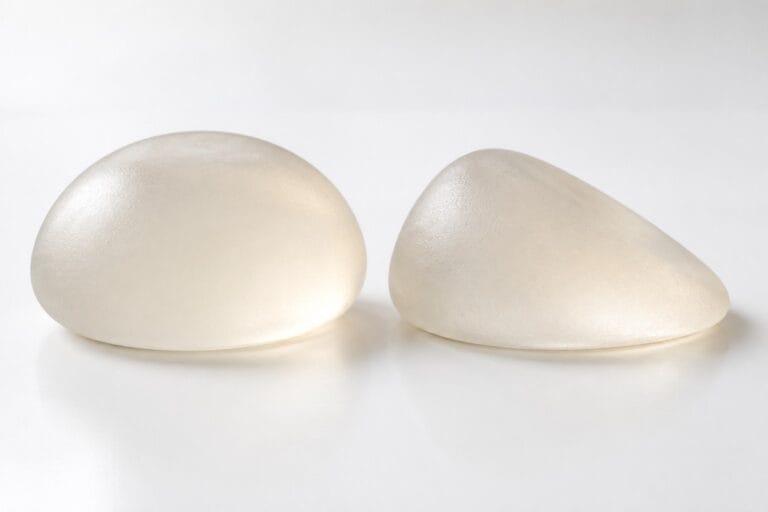
- Buttock implants versus fat transfer. Silicone implants give a fixed, predictable volume and suit patients with no donor fat; they carry their own risks of displacement, infection and hardening. Fat is softer, moves naturally and has no device to maintain, but part of it is reabsorbed. I prefer fat whenever there is enough of it, place implants when there is not, and combine a smaller implant with fat grafting over it when the shape needs both.
- Non-surgical BBL, buttock fillers, injectable butt lift. Large volumes of injectable filler placed in the buttocks. The volumes needed are far beyond what fillers were designed for, the results are temporary and the complication reports are not reassuring. Liquid silicone injections, offered in some places, are dangerous and I will not treat a patient who has had them without imaging first.
- Fat survival, fat take. The share of transferred fat that stays alive and becomes permanent, discussed in the risks section below. It is the number that decides your final shape, and nobody can promise it in advance.
Who Is a Good Candidate
The operation suits patients with enough donor fat to harvest, reasonable skin quality over the buttocks, and a stable weight. Flatness, hip dips and a waist that has lost its definition are the usual complaints. Patients who have lost a large amount of weight often want a BBL and are frequently better served by a lift or a combined plan, because adding volume beneath loose skin makes the skin looser.
The honest exclusions. Very lean patients do not have the fat to make a visible difference, and I will say so rather than harvest aggressively to find it. If your weight is still moving, wait, because fat transferred to the buttock behaves like the rest of your fat and will shrink if you lose weight afterwards. If you want the projection you have seen on social media, understand that much of it is either an implant, a filter, or both. And if you smoke, fat survival drops; read my guide to smoking and surgery before booking.
The Operation
A BBL is performed under general anaesthesia and takes roughly three to four hours depending on how many areas are treated. Liposuction is done first, usually as a 360 degree treatment of the waist, flanks and back, with ultrasound assistance where the fat is fibrous. The harvested fat is processed, and the volume that can actually be transferred is always less than the volume removed.
How much is injected is decided by the tissue, not by a target number. The subcutaneous layer holds a finite volume before the fat is packed too densely to be reached by blood supply, and overfilling is the most common reason transferred fat dies. Quality of placement beats litres claimed.
You spend one night in hospital. Drains are placed and usually come out within two to three days, rarely later; the decision is based on how much fluid they collect in 24 hours.
Your Week in Istanbul
- Day 0: surgery and one night in hospital.
- Days 1 to 5: at your hotel. Compression garment on, walking encouraged, sitting in short spells rather than long ones. Swelling and bruising in the liposuction areas peak around day three.
- Day 6 to 7: check, dressings, and you fly home. Plan seven days in Istanbul.
Sitting is where you will read the most alarming advice online, and I want to be reasonable about it. Prolonged direct pressure on the buttocks compresses the newly transferred fat, so the rule I give patients is simple: short sitting is fine, up to about half an hour at a time, and a cushion that takes the weight on the back of the thighs makes that easier. Sleep on your front if you can manage it, or on your side if you cannot.
Beyond that, move as much as you comfortably want to. Some clinics turn the first weeks into an ordeal of standing and lying face down. I do not think that is necessary, and patients who are miserable tend to follow instructions worse, not better. Walk, rest, sit for a while, get up again. For the flight home a cushion is worth packing.
The compression garment stays on for six weeks. Desk work is realistic at two weeks, gym at six to eight. The final shape settles at around three to six months, once the fat that survived has stabilised and the swelling in the liposuction areas has resolved.
If you want a day by day plan built around your own surgery date, the recovery planner will make one.
Risks and Honest Limits
Fat embolism is the risk that gives the operation its reputation, and subcutaneous-only placement with ultrasound guidance is what addresses it. The routine risks are the ones you should actually plan around: seroma and contour irregularity in the liposuction areas, asymmetry, infection, and prolonged swelling.
The limit that disappoints most often is fat survival. Not all transferred fat lives. A meaningful proportion is reabsorbed over the first three months, and the amount varies between patients in ways that cannot be predicted precisely beforehand. As a rough guide, somewhere between 40 and 60 percent of the transferred fat survives, but that is a range, not a promise. Be sceptical of any clinic that gives you a firm survival percentage: the published figures vary widely between studies and there is no single reliable number to quote. Some patients want a second session once the first has settled, and it is more honest to plan for that possibility than to promise it will not be needed.
Skin quality is the other limit. Fat adds volume; it does not tighten skin. Where laxity is the real problem, surgery for loose skin after weight loss is the relevant conversation, not a BBL.
When a BBL Goes Wrong: Revision BBL
BBL consultations in my practice are a mix: patients who have never had surgery, and patients whose fat transfer was done elsewhere and has left problems. In the second group the problems repeat: asymmetry between the two sides, a result that was overfilled into a “shelf” that looks wrong from the side, a result that was underfilled because most of the fat did not survive, hard lumps or oil cysts where fat was packed too densely, and waviness, dents or a missed zone in the liposuction areas, which patients often notice more than the buttocks themselves.
Each has a specific answer. Underfilling and asymmetry are corrected with a second fat transfer, provided there is donor fat left to use. Overfilling is treated with careful liposuction of the excess, which is more demanding than it sounds because the grafted fat is mixed with scar tissue. Lumps are assessed with ultrasound first, since a firm oil cyst, a seroma and simple fat necrosis are treated differently. Donor area irregularities are blended with VASER and, where there is a dent, a small fat graft.
Timing matters more here than in most revisions. Transferred fat keeps changing for months, so a shape that looks wrong at six weeks may look right at six months. Unless there is an infection or a collection that needs draining, I ask for at least six to twelve months after the previous operation. If you are in that position, send photographs taken standing and relaxed from the back, both sides and the front, and the operation report if you have it; knowing how much fat was injected and where it was placed changes the plan.
BBL Cost in Turkey: What Shapes the Price and What Is Included
A BBL in Istanbul costs considerably less than the same operation in the United Kingdom, Germany or the wider EU, and the difference reflects local operating costs rather than the technique, the equipment or the anaesthesia team. I do not publish a single price, because what moves the figure is specific to you:
- How many areas are treated with liposuction. A full Lipo 360 with the thighs is a longer operation than the waist and flanks alone.
- Operating time and the hospital stay. Set by the number of areas and the volume harvested.
- First operation or revision. Correcting an earlier BBL is planned as a separate category, because scar tissue slows every step.
- A planned second session. When the goal needs more volume than one transfer can safely deliver, the second session is quoted at the outset, not discovered later.
- What is combined. A BBL with a tummy tuck or as part of a mommy makeover is quoted as one plan, not two.
I give a written quotation after reviewing your photographs and history. Every quotation is all inclusive: the surgery, the hospital stay, the anaesthesia, medication, the compression garment, lymphatic massage where it is part of the plan, your accommodation, airport and clinic transfers, and the follow-up visits and post-operative contact in Istanbul.
Be careful with prices well below the market for this operation in particular. The costs a clinic can cut on a BBL are anaesthesia cover, operating time and imaging guidance, and those are precisely the things keeping it safe.
Send your photographs for an assessment. Front, back and both side views, standing, plus a note of your height and weight, are enough for me to tell you whether you have the donor fat for a meaningful result and what shape is realistic. Message on WhatsApp
BBL Before and After: How to Read the Photographs
BBL photographs are the most flattered in plastic surgery, and the tricks are simple. An arched back and a slight turn of the hips add projection that is not there; a high-waisted garment in the after photograph narrows a waist the surgery did not; lighting from the side deepens a curve. Three rules for reading them, mine included. Compare the same view, standing relaxed with the feet together, under the same light. Ask when the after photograph was taken: at six weeks the buttocks are swollen and the fat has not yet been reabsorbed, so the honest photograph is at six months or later, when what you see is what stays. And look at the donor areas as closely as the buttocks, because a smooth waist and back are half the result and the first place a rushed operation shows.
Then look for a starting point like yours, in frame, available fat and skin quality, rather than the most dramatic change in the set. My BBL results, with the areas treated, the volume transferred and the time since surgery, are in the before and after gallery. When you send your own photographs, I will show you cases with a similar starting point.
Frequently Asked Questions
Is a BBL safe?
When the fat is placed only in the subcutaneous layer, above the muscle, with ultrasound guidance and blunt cannulas of at least 4 mm, the current risk profile is comparable to other major body contouring operations. That combination is what modern practice is built on, and it is a fair thing to ask any surgeon you consult about.
How much fat survives?
A substantial proportion of transferred fat is reabsorbed in the first three months; roughly 40 to 60 percent survives, and the exact figure varies by patient. The shape you have at three to six months is the shape that will last, provided your weight stays stable.
When can I sit normally after a BBL?
Straight away, in short spells. Up to about thirty minutes at a time is fine, ideally with a cushion that takes the weight on the back of the thighs. What you avoid is sitting on the buttocks for hours at a stretch in the early weeks. Otherwise, move as much as you feel like moving.
How long do I stay in Turkey for a BBL?
Seven days: one night in hospital, recovery at your hotel with the compression garment on, and a final check before flying.
Can I have a BBL if I am slim?
Only if there is enough fat to harvest. In very lean patients the honest answer is that the result will be subtle, and I would rather say so in consultation than promise a change I cannot deliver.
Does a BBL fix loose skin?
No. Fat adds volume and does nothing for skin laxity. If loose skin is the main problem, a lifting procedure is the correct operation.
Can a BBL be combined with liposuction 360?
It already is. The liposuction 360 is the first half of the operation, and in most patients the waist definition it creates does as much for the silhouette as the fat that is added.
Is a BBL in Turkey safe?
The risks of a BBL are the same in every country; what changes is who operates, how the fat is placed and where. Choose a board-certified plastic surgeon who performs the operation regularly, ask whether the fat is placed only above the muscle and whether ultrasound is used during the transfer, insist on an accredited hospital with a physician anaesthesiologist, and make sure follow-up after you fly home is part of the plan. I have written a separate guide on how to judge whether plastic surgery in Turkey is safe.
What is the difference between a BBL and a Colombian butt lift?
A BBL is surgery: liposuction, then your own fat transferred into the buttocks under general anaesthesia. The “Colombian butt lift” sold in salons is a vacuum cup treatment with no surgery, no fat transfer and no lasting change. If you want a modest, natural result rather than projection, that is a conservative BBL, and it is a conversation about the plan, not a different procedure.
BBL or buttock implants?
Fat, whenever there is enough of it: it is softer, it moves with you and there is no device to maintain or replace. I place implants for the lean patient who has no fat to harvest and wants a clear change in volume, after going through the trade-offs, including displacement and hardening. When the shape needs both, I combine a smaller implant with fat grafting over it.
About the Surgeon
Dr Mustafa Aydınol is a plastic, reconstructive and aesthetic surgeon practising in Istanbul, a member of ISAPS and of the Turkish Society of Plastic Reconstructive and Aesthetic Surgeons. The practice holds Health Tourism Authorization from the Turkish Ministry of Health. Consultations are conducted in Turkish, English, German and Italian.